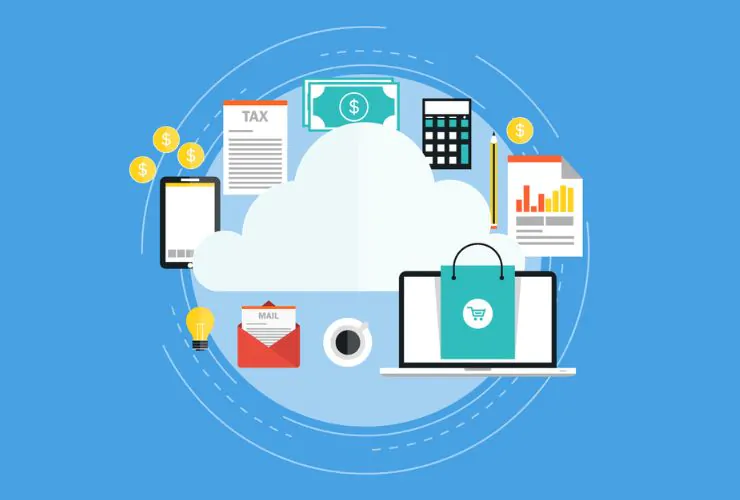




Because of an increase in competition and evolving customer expectations, companies are now quickly creating their digital infrastructures through the use of cloud app solutions. Traditional systems are not a viable option anymore; therefore, businesses need to have flexible and cost-effective solutions that can be implemented quickly. This is where cloud app solutions come into play.
Cloud application development services are being utilized by modern organizations to build scalable platforms, increase performance, and create seamless user experiences. As a result of this, investing in cloud scalable architecture will be necessary for any organization that wants to compete effectively for the long term.
What Are Cloud-Based Applications?
Cloud-based applications are software programs that run on remote servers instead of local machines. Users can access these applications through the internet, making them highly flexible and accessible.
Common examples:
- SaaS platforms
- CRM systems
- Web applications
- Enterprise software
These applications are a key part of cloud computing advantages and are widely used in modern business cloud solutions.
Why Cloud-Based Applications Are Essential for Business Growth in 2026
1. Cloud scalability for businesses in growth mode
Scalable architecture on the cloud provides businesses with the ability to scale for growth without the challenges typically associated with scaling.
Advantages:
- Ability to easily scale up or down resources
- Ability to scale up or down based on usage demand without any interruption to customer experience (i.e., no downtime)
- Ability to scale up or down as a company expands
These benefits make scalable cloud applications perfect for growing companies.
2. Affordable & Flexible
Traditional infrastructure generally requires a large initial investment of working capital. Cloud application development will allow businesses to save a great deal of money ($$).
Cost benefits of this development include:
- You only pay for what you use
- No upfront capital investment for hardware
- Reduced cost of maintaining your application
So these are the reasons that cloud computing features are helping to transform modern businesses.
3. Remote & Flexible Access
Cloud-based applications allow businesses to access information from any location.
The following are great examples of companies who benefit from remote access and flexible working arrangements.
- Remote teams
- Multinational corporations (global)
- Businesses that operate in a hybrid working environment
As such, many companies are moving to use business cloud solutions because of this increased level of flexibility.
4. Enhanced Security
The security of sensitive information will become increasingly important over the next 5 years (2026). Advanced cloud-based application solutions now provide:
- Data Encryption
- Trusted authentication
- Regular backup of data
This will ensure that businesses can operate using cloud applications in a highly secure and reliable manner.
5. Performance & Speed
Cloud systems use multiple distributed servers to provide businesses with very fast performance.
Benefits of this fast performance will include:
- Low latency
- Fast loading times
- Excellent user experience
All of these benefits support optimized web application performance and overall productivity.
6. Automatic Updates & Maintenance
It’s the responsibility of cloud providers to automatically handle application updates.
Examples of this would be:
- Application software update
- Security patch update
- System update
Businesses using cloud application development services can focus on growth instead of maintenance.
7. Data Backup and Disaster Recovery
Data loss can be costly. Cloud platforms provide automatic backups.
Benefits:
- Quick recovery
- Reduced downtime
- Business continuity
This makes cloud infrastructure services essential for modern enterprises.
Cloud vs Traditional IT Infrastructure: Which Is Better?
| Feature | Cloud-Based Applications | Traditional Systems |
|---|---|---|
| Cost | Low upfront cost | High investment |
| Scalability | Highly scalable | Limited |
| Accessibility | Anywhere access | On-site only |
| Maintenance | Managed by provider | Manual |
| Deployment | Fast | Slow |
Role of AI in Cloud Applications
AI is transforming cloud computing by enabling:
- Automated workflows
- Customer behavior analysis
- Intelligent decision-making
Businesses using AI-powered cloud systems gain a competitive edge by making faster and smarter decisions.
Real-World Use Cases of Cloud-Based Applications
Business Case Example
Challenge
The business was using an older style of IT infrastructure. As a result, they were experiencing slow performance and frequent downtime.
Solution
Move to cloud-based applications with scalable architecture.
Results
- Cost savings of 50%
- Performance speed three times faster
- Significantly improved customer experience
Main Characteristics of Cloud-Based Applications
- Auto-scaling infrastructure
- High availability
- Compatibility with multiple devices
- Processing of real-time data
- Integration through APIs
These characteristics help define modern cloud-based software applications for businesses.
Advanced Cloud Strategies for 2026
- Serverless computing: run an application without having to maintain all the hardware associated with it
- Multi-cloud Strategy: use multiple providers to maintain flexibility
- Microservices architecture: break your application up into smaller pieces that are easier to maintain and scale
- Artificial intelligence (AI) integration: use AI tools available through your Cloud Provider to automate processes or analyze large sets of data
Together, these advanced clouds will increase both the scalability and the efficiency of your application.
Ready to Transform Your Business with Cloud Technology?
Empirical Edge provides expert cloud-based application solutions to help you scale faster and perform better.
Frequently Asked Questions
Cloud-based applications are software programs hosted on remote servers and accessed via the internet.
Cloud-based applications are essential in 2026 because businesses need to operate faster, smarter, and more efficiently in a highly competitive digital environment. These applications provide scalability, cost efficiency, and flexibility, allowing companies to adapt quickly to changing market demands.
Cloud computing offers multiple advantages that directly impact business growth and efficiency. One of the biggest benefits is cost savings, as businesses no longer need to invest heavily in hardware or maintenance.
Cloud-based applications improve performance by using distributed computing systems that process data across multiple servers instead of relying on a single machine. This reduces load time, minimizes downtime, and ensures faster response rates.
Written by: Empirical Edge