


Cloud applications help businesses reduce costs, improve scalability, enable remote access, enhance security, and boost performance through flexible cloud-based solutions.
Today, with more and more business transactions occurring digitally—and more often being done online due to COVID-19—companies need to be able to operate quickly, easily, and at the same time scale up as necessary in their operations. The best way to accomplish this is by leveraging cloud-enabled technology. Cloud-based applications let businesses access their applications on demand and will help businesses utilize technology that helps business owners manage their businesses more flexibly, effectively, and efficiently than they do with traditional computer systems where there are high capital expenses associated with maintaining large amounts of IT infrastructure.
In 2026, if your company implements cloud-based application technology capabilities, your company will experience lower costs, faster time-to-market and have more opportunities for ongoing innovative solutions.
What Are Cloud Applications?
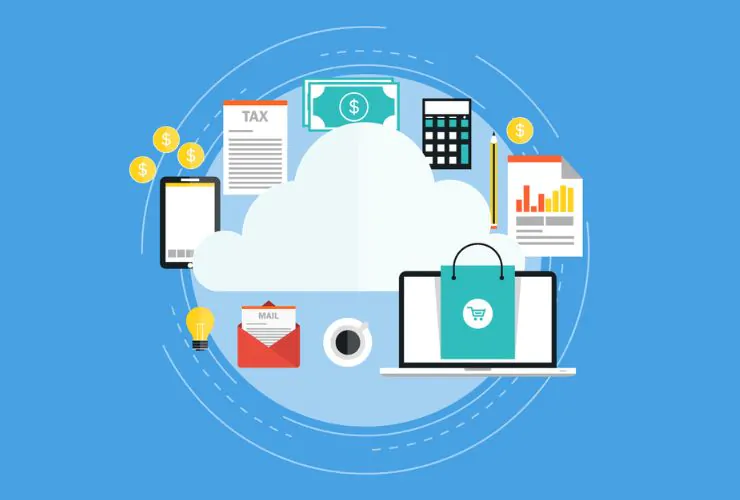
Cloud applications are applications that run on a remote server, which the user accesses using the internet, as opposed to running an application on their local computer. The user is able to log into the application from any device and perform their tasks in real-time.
Examples are CRM systems, cloud storage systems, and project management applications.
Why Businesses Are Moving to Cloud in 2026
- Remote work is increasing: The increasing popularity of remote work means that teams need to securely access their systems from anywhere in order for cloud applications to become an integral part of their workflow.
- Data is growing rapidly: As the volume of data generated by businesses continues to soar, there is also a growing need for scalable storage and processing solutions.
- Businesses need real-time insights: Having access to real-time data can help organizations make quicker business decisions, thanks to all the instant access to data provided by cloud platforms.
- Scalability is essential for growth: Achieving rapid scalability through cloud technologies provides companies with the ability to adjust to changes in their operation at any given time, without being restricted by a lack of physical resources.
Cloud applications solve all these challenges efficiently.
Top Benefits of Cloud Applications for Business in 2026
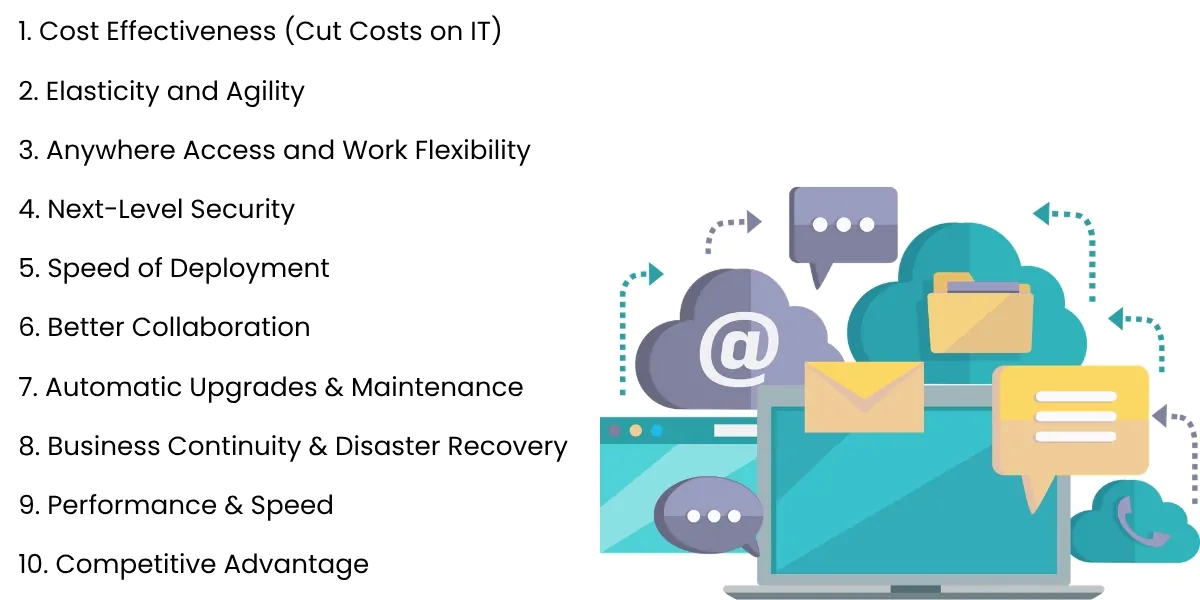
1. Cost Effectiveness (Cut Costs on IT)
Cloud computing removes expensive IT infrastructure and support.
- No Hardware Costs
- Pay As You Need
- Lower Operating Costs
Companies experience noticeable savings with improved productivity.
2. Elasticity and Agility
Cloud apps accommodate growing businesses.
- Can easily expand or decrease resources
- Handles spikes in traffic with no downtime in service
- No downtime from expanding your business
Great for new companies and companies that are growing.
3. Anywhere Access and Work Flexibility
All employees can work from anywhere using cloud-based systems.
- Can access cloud-based systems from any device
- Can work in real-time with other team members
- Increased productivity
Best for remote or hybrid teams.
4. Next-Level Security
Leading cloud platforms have enterprise-level security capability.
- Data is encrypted
- Multi-factor Authentication
- Regular backups & Disaster Recovery
Your company’s information is safe and secure in the cloud.
5. Speed of Deployment
Cloud apps can be deployed faster than traditional systems.
- Reduced Development Time
- Faster Time-to-Market
- Competitive Edge
6. Better Collaboration
Teams can collaborate using cloud tools in real-time.
- Shared Dashboards
- Information Updates in Real-Time
- Better Communication
7. Automatic Upgrades & Maintenance
Cloud providers will provide automatic updates.
- No Manual Updates
- Always Have the Latest Version
- Reduced IT Workload
8. Business Continuity & Disaster Recovery
Cloud provides automatic backup solutions to your company’s data.
- Quick Recovery from Disasters
- Minimal Downtime after a Disaster
- Reliable Operations after a Disaster
9. Performance & Speed
The cloud provides fast performance due to the infrastructure it uses.
- Low Latency
- High Availability
- Improved User Experience
10. Competitive Advantage
Cloud adoption allows businesses to innovate faster.
- Faster decision-making
- Better customer experience
- Improved agility
Real-World Examples of Cloud Solutions
eCommerce:
Handling traffic spikes, managing inventory, improving speed of the checkout process
Small Businesses:
Enterprise-level tools at a lower price point
Healthcare:
Remote patient management, secure data storage
Cloud Applications vs Traditional Software
| Feature | Cloud Applications | Traditional Software |
|---|---|---|
| Access | Anywhere | Limited to device |
| Cost | Subscription-based | High upfront cost |
| Scalability | High | Limited |
| Maintenance | Automatic | Manual |
Cloud Computing Trends in 2026
The Cloud Computing industry is changing rapidly, as more businesses continue to adopt new and innovative cloud technology solutions to remain competitive in their respective markets.
As businesses develop new and innovative ways to utilize cloud technology, it is critical for them to understand the following five trends in 2026 will have a significant impact on cloud computing as we know it today:
1. Artificial Intelligence (AI) Cloud Applications – Increasingly automated processes, improving personalization and decision-making processes through AI-enabled software
2. Adopting Hybrid Cloud Solutions – Combining multiple clouds (public and private) provides improved agility and control over your data and cloud applications
3. Introducing Serverless Computing – Allows for building and deploying applications without having to manage IT infrastructure reducing costs and operational complexity
4. Edge Computing – Allows for processing data closer to the end-user, resulting in improved speed/latency
5. Development of Advanced Cybersecurity Solutions – Enhanced security and data protection through the use of encryption, zero trust models, and threat detection and response
Ultimately, these trends will lead to a highly productive and cost-effective cloud technology solution that will drive modern-day business development in the future.
Common Mistakes to Avoid
Equally important, are the common pitfalls that businesses may encounter on their path to adopting cloud technology. Businesses should avoid the following errors:
- Selecting a cloud solution that does not meet their business requirements
- Not implementing the necessary security measures to protect against data breaches and loss.
- Overpaying for unused resources (lack of resource management) leading to higher operational costs
- Not properly planning or creating a clear implementation strategy (without this information businesses increase their risk of failing) and may not reach their desired results
- Not optimizing the performance of their application (ineffective configuration will slow down the performance of your application)
By leveraging these common pitfalls businesses can improve operational efficiency, achieve greater cost-efficiency and realize greater overall value from their investment in cloud technology.
Conclusion
Cloud applications are transforming modern businesses by improving efficiency, scalability, and performance.
Want to scale your business with cloud applications?
Empirical Edge provides secure, scalable, and high-performance cloud application services tailored to your needs.
Frequently Asked Questions
Cloud applications are software programs hosted on remote servers and accessed via the internet, allowing users to work from anywhere.
The main benefits include cost savings, scalability, remote access, improved security, and faster deployment.
Yes, cloud applications use advanced security measures like encryption, backups, and multi-factor authentication to protect data.
Yes, cloud is cost-effective and ideal for startups and small businesses.
Cloud will grow with AI, automation, and advanced analytics.
Written by: Empirical Edge