



Healthcare is evolving rapidly. Patients expect faster service, personalized treatment, and seamless digital experiences. Healthcare providers aim to improve outcomes while managing costs and operational complexity.
Artificial Intelligence (AI) is bridging that gap.
Today, forward-thinking healthcare organizations are leveraging AI-powered IT solutions to deliver smarter care, improve clinical efficiency, and create sustainable growth.
Intelligent Diagnostics and Rapid Decision-Making
Systems driven by artificial intelligence (AI) can evaluate and interpret huge quantities of healthcare data in only seconds instead of the many hours or days it would require human resources to complete. Examples of this type of automated analysis of medical data include the following:
- AI-assisted imaging technologies enable radiologists to identify abnormal findings at the earliest possible time.
- Predictive analytics allows for the identification of high-risk patients ahead of the time that their conditions worsen.
- Clinical decision-support technologies improve the accuracy of diagnosis by minimizing misdiagnoses.
Examples from companies such as IBM Watson Health and Google Health demonstrate how AI models are used to provide doctors with real-time information that can assist them in making clinical decisions.
The outcomes are improved speed of diagnosis, improved diagnostic accuracy, and improved patient outcomes.
Tailored Patient Care
Modern consumers are accustomed to receiving a medical treatment plan specific to their individualized healthcare needs.
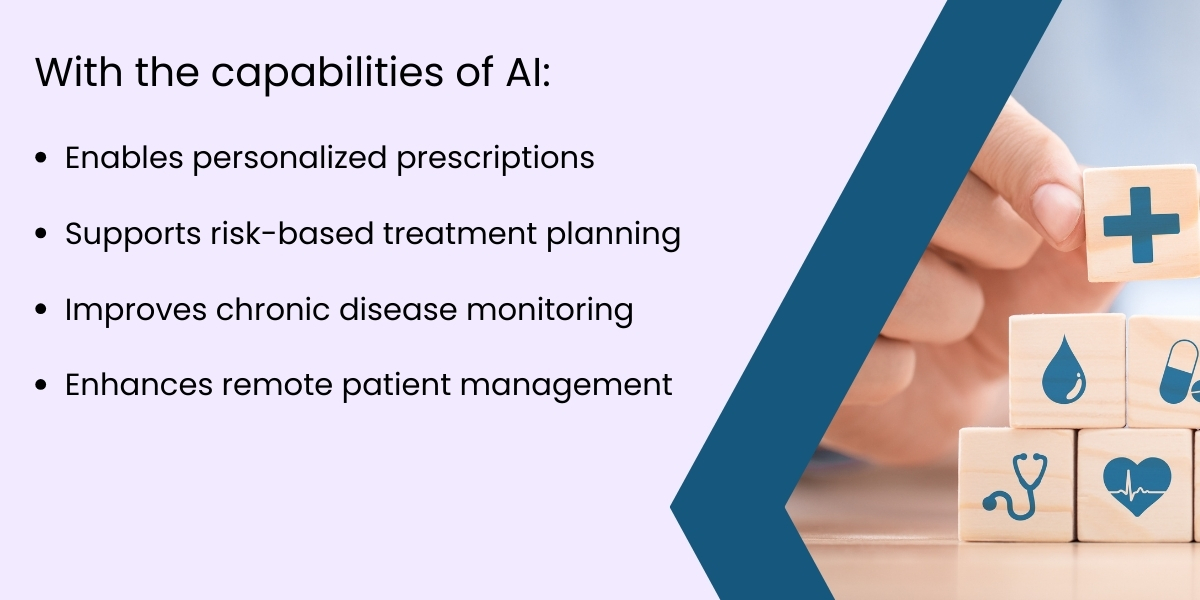
AI applications can assist clinicians in making data-driven clinical decisions based on historical data, genetics, and social history which will enhance patient long-term health outcomes.
For patients, this results in greater confidence and higher-quality health care.
Automating Administrative Workflows
One of the challenges facing the current healthcare delivery system is the administrative burden on healthcare professionals. Automating administrative tasks through the use of AI will allow healthcare organizations to use AI systems to perform:
- Scheduling patient appointments
- Processing and creating medical billing and claims
- Managing electronic medical records (EMR)
- Validating patient insurance coverage
- Providing clinical documentation and transcription services
Reducing the workload of staff allows healthcare professionals to spend more time providing quality patient care.
How Top Healthcare Technology Trends Transforming the Industry : https://empiricaledge.com/blog/top-healthcare-technology-trends/
AI Helps Turn Reactive Healthcare into Proactive Healthcare
By using patient data trends, hospitals can:
- Predict patient readmission rates
- Identify potential complications
- Improve the allocation of ICU resources
- Anticipate patient flow
Predictive analytics systems can also be used to help hospital administration:
- Allocate staff effectively and provide adequate resources and equipment
- Improve patient safety and service level performance
Telehealth / Remote Monitoring Enhancements
Artificial intelligence is transforming how healthcare organizations are delivering the care they provide through telehealth and remote monitoring solutions.
AI-powered telehealth solutions can:
- Monitor patient vitals in real-time
- Alert providers when there are out-of-range vitals
- Run chatbot assessments for symptoms
- Provide virtual triage
With the growing number of cloud-based telehealth solutions, healthcare providers can provide the same level of high-quality service to patients no matter where they are located, giving them a competitive edge in the healthcare market.
Protection of Patient Data Security and Compliance
The protection of sensitive patient information has made the healthcare industry one of the most regulated sectors of any industry.
AI-driven security can be used to:
- Detect unusual patterns of access to patient data (e.g., access by unauthorized people)
- Prevent fraud
- Protect patient records and other sensitive information
- Ensure continued compliance with all global data protection standards
Incorporating AI into secure IT architectures improves trust and operational integrity between healthcare providers and their patients.
Reasons Healthcare Organizations Are Investing In Artificial Intelligence
Healthcare executives are choosing to change their organizations by making the transition to AI-based solutions because they believe it will provide:
- Improved patient satisfaction
- Reduced operational costs
- Faster clinical workflows
- Better resource utilization
- Scalable digital infrastructure
- Competitive differentiation
Above all, healthcare organizations want to use AI to deliver higher quality care while maintaining a lower total cost of care.
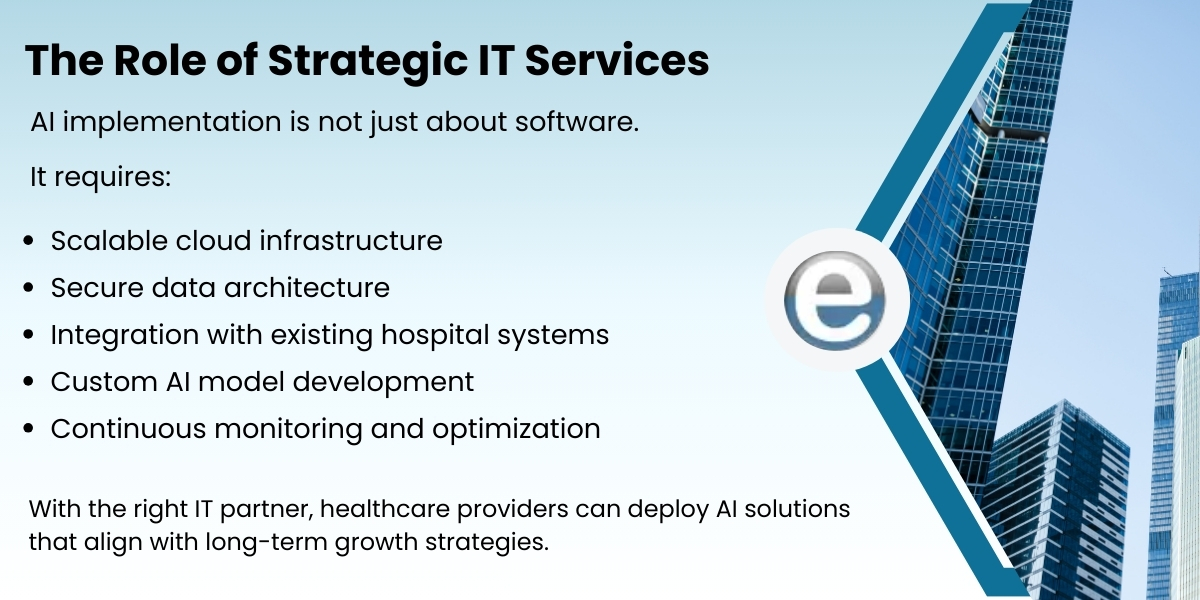
Ready to integrate AI into your healthcare ecosystem?
Empirical Edge helps healthcare organizations worldwide design, develop, and deploy secure, scalable AI-powered IT solutions that improve patient care and clinical performance.
Let’s build the future of healthcare — intelligently.
Frequently Asked Questions
AI enhances diagnostic accuracy, personalizes treatment plans, and enables early detection of health risks through predictive analytics.
Yes. AI automates administrative tasks, improves resource allocation, and reduces manual errors, leading to significant cost savings.
When built with secure IT architecture and compliance standards, AI systems can enhance data security and fraud detection.
No. AI supports healthcare professionals by providing insights and automation, allowing them to make better-informed decisions.
Hospitals, diagnostic centers, telemedicine providers, pharmaceutical companies, and insurance organizations all benefit from AI integration.
They can begin with strategic IT consultation, data assessment, pilot projects, and phased AI deployment tailored to their infrastructure.
Written by: Empirical Edge Team