



In 2026, software development will be one of the largest expenditures businesses will incur. Startup MVPs and Enterprise SaaS platforms can cost significantly more than expected.
Industry research shows:
Software projects typically range in cost from $25,000-$200,000 or more, depending on their complexity.
Enterprise systems can be priced anywhere from $400K-$2M+
Developer hourly rates can vary significantly based on geographical location; for example, developers in Asia charge between $20 to $250 or more for every hour worked.
However, what many companies don’t realize is this:
Reducing development costs does not mean sacrificing quality; it involves creating efficiencies.
This guide will outline effective strategies, provide real-world case studies and actionable tips on how to cut software development costs while maintaining quality of production, scalability, and user experience.
What Increases Software Development Costs
Before identifying ways to reduce development costs, you must first understand the factors driving them.
Some of the primary cost-causing elements are:
- Poor project management/timelines/schedules
- Overdevelopment of features for a project
- Inefficient team with misaligned or competing goals
- Lack of documentation
- Rework due to vague/difficult requirements
Developers are estimated to spend more than 10 hours each week searching for information due to lack of documentation.
The added labor cost incurred during that time frame will be considered as a development cost with no additional value on project performance.
10 Proven Ways to Cut Software Development Costs (Without Sacrificing Quality)
1. Define Your Project Scope
When no project scope is defined the following occur:
- Scope creep
- Delays
- Exceeding budget
Define The Following:
- Core Features
- Target Users
- Business Goals
Tip: Build an MVP before developing the full product
The Cost Of An MVP May Range From $45K To $120K Compared To A Full Platform That Could Exceed $400K
2. Focus On MVP Development First
Instead Of Building Every Feature At Once:
Launch With The Following:
- Core Features
- Basic UI/UX
- Scalable Architecture
Have A Real-World Tip: Many Startups Report Savings Between 30%-50% By Launching MVP First.
3. Choose the Right Development Model
Different models impact cost:
| Model | Cost Efficiency | Best For |
|---|---|---|
| Fixed Price | Medium | Defined projects |
| Time & Material | High | Agile projects |
| Dedicated Team | Very High | Long-term scaling |
4. Outsource Wisely (not cheaply)
Outsourcing can save an excellent deal of money – however, it must be done properly in order to be effective.
Cost Estimates:
- Outsourcing to Asia: $20-$50 hr
- Outsourcing in the U.S.: $80 – $250 hr
Companies can save between 35% – 60% when they outsource globally.
Poorly done outsourcing can result in rework costs of 20% – 30%.
Be sure to find the best cost/benefit option.
5. Use An Agile Development Methodology
Agile Development can cut costs by:
- Using Iterative Development Cycle
- Getting Continuous Feedback
- Identifying Problems Early in the Development Cycle
Benefits of Agile include:
- Less costly errors
- Faster Release Time
- Better Control of Your Budget
6. Reuse existing solutions & framework wherever possible.
There is no need to reinvent the wheel.
Examples of reusable solutions include:
- Open Source Libraries
- Pre-existing API’s
- SaaS Integrations
Reusing Solutions can save 20% to 40% of development time.
7. Invest in good UI/UX from the beginning
Bad UI/UX can equal expensive rework.
Good UI/UX:
- Reduces Confusion during the development cycle
- Increases user adoption
- Lowers Costs associated with redesigns
On average UI/UX can cost between 10%-15% of the total project cost.
8. Automate Testing and Quality Assurance
Manual Testing takes much longer and is generally Much More Expensive.
Options for Automated Testing and QA conduct include:
- Automated Testing Tools
- CI/CD Pipelines
In an average project 10% to 15% of the overall project budget will be spent on QA, however, automating your testing will ultimately save you money in the long run.
9. Improve Your Documentation and Communication
If documentation is poorly done, your company is wasting time, and ultimately money.
Examples of documentation sources include:
- Clear Define Requirements
- Technical Documentation
- Code Comments
The lack of documentation could cost developers up to five hours per week in wasted time.
10. Plan for Scalability from Day One Of Development
If you build low-quality or non-scalable solutions today, it will cost significantly more to scale in the future.
When to build:
- Modular Based Architecture
- Infrastructure capable of Scalability
- Cloud-Ready System
If you don’t plan for growth from the start, you will likely end up incurring twice the cost to support your growth.
Real-World Case Study
Case: SaaS Startup Reducing Development Costs by 40%
Problem:
A SaaS startup planned a full-featured platform costing ~$250K.
Solution:
- Built MVP first
- Used offshore developers
- Adopted Agile approach
- Integrated third-party APIs
Result:
- Final MVP cost: $110K
- Saved: ~56% of initial budget
- Faster time to market
Cost Breakdown: Where Your Budget Goes
| Phase | % of Cost |
|---|---|
| Planning | 5–10% |
| UI/UX Design | 10–15% |
| Development | 50–60% |
| QA Testing | 10–15% |
| Deployment | 5–10% |
Common Mistakes That Increase Costs
Avoid these common mistakes:
- Overdeveloping products
- Wrong staffing
- No regard for scalability
- Ineffective communication
- Not testing
How Empirical Edge Provides Cost-Effective Software Development
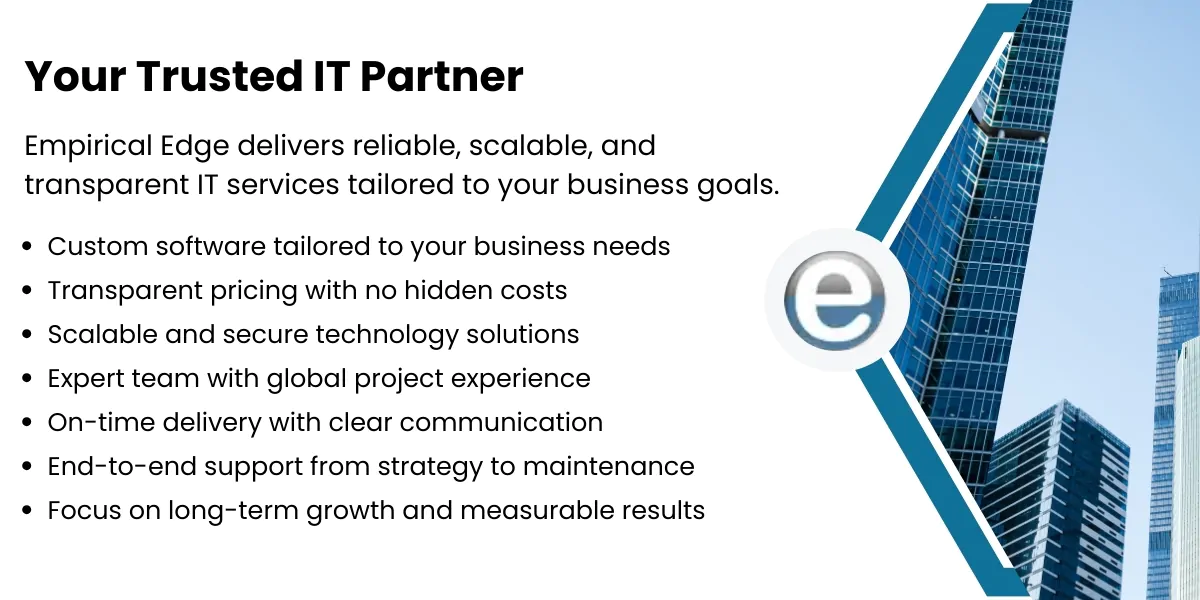
Empirical Edge provides cost effective and high quality software development through an emphasis on cost effectiveness.
Why Work With Empirical Edge?
- AI-driven software development approach
- Tailored solution to meet your business needs.
- Agile and scalable architecture that minimizes long-term expenses/commitments.
- Global development team with a proven track record for quality at affordable pricing.
- Complete service from initial concept through final production.
We build quality and scalable digital products while keeping the costs to a minimum.
Want to reduce your software development costs without sacrificing quality?
Frequently Asked Questions
Focus on MVP development, outsourcing, Agile methodology, and automation to reduce costs efficiently.
No—if done strategically. Smart optimization improves efficiency without compromising quality.
No, reducing costs does not affect quality if done strategically. By optimizing workflows, using experienced developers, and leveraging modern tools and frameworks, businesses can maintain high standards while lowering expenses. The key is to eliminate inefficiencies—not cut critical processes like testing or design.
Yes, outsourcing is a proven strategy to reduce costs by 35–60%, especially when working with experienced offshore teams. It provides access to global talent, faster development cycles, and lower operational costs. However, choosing the right development partner with strong communication and technical expertise is critical for success.
The most cost-effective approach combines Agile development, MVP strategy, and scalable architecture. Agile ensures flexibility and faster iterations, MVP reduces initial investment, and scalable systems prevent expensive future rebuilds. This combination helps businesses launch quickly while optimizing long-term costs.
Written by: Empirical Edge