



Today, artificial intelligence (AI) is changing how businesses are run in a huge way, and it will keep doing that in the future. It can help companies run smoothly inside, improve customer interactions, and create ways to make good decisions. AI has become an important driver of competitive advantage for all businesses in all industries.
For businesses that operate in an increasingly digitized world, having access to AI isn’t only about experience; it’s also a key strategy needed by all organizations to succeed long into the future.
To help you understand how other companies are successfully using AI to develop their competitive advantages and show you why you need to implement AI into your company to remain innovative, scalable, and successful, we’ll take a closer look at how major corporations are currently utilizing AI.
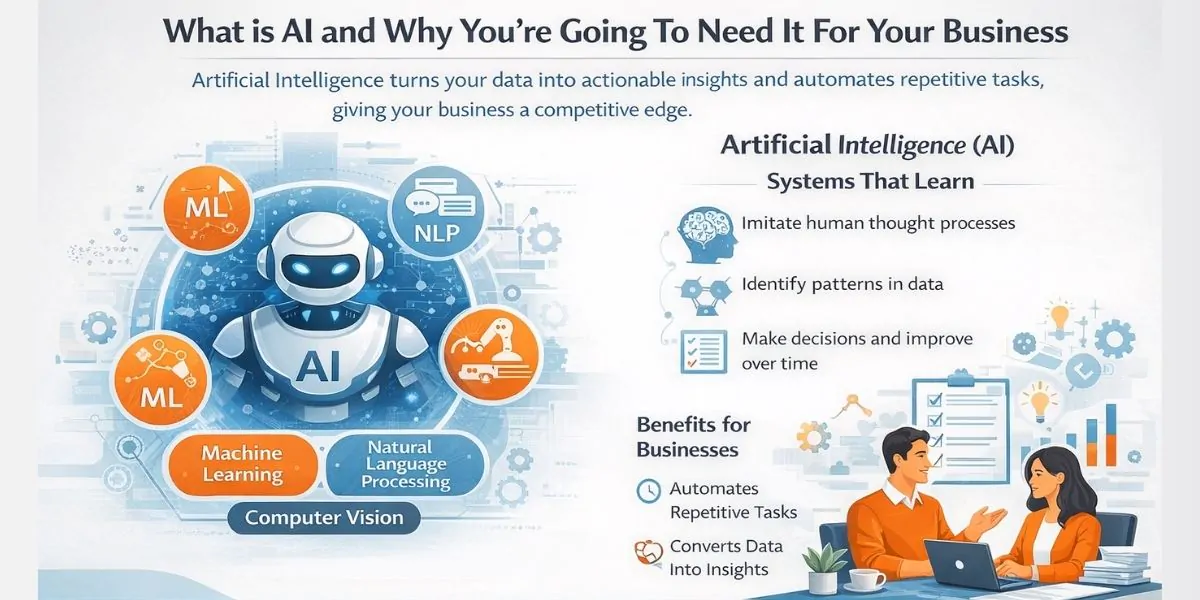
What is an AI and Why You’re Going To Need It For Your Business
Artificial Intelligence (AI) is defined as systems that are created to learn from experience, imitate human thought processes, store information, make decisions, and learn from past decision-making experiences such as reacting/processing customer or business data by identifying patterns and aggregating data over time. As technologies have improved related to the fields of machine learning (ML), natural language processing (NLP), computer vision (CV) technologies, and automation, the tools associated with artificial intelligence have become cost-effective/executable for all sizes of companies that are serious about being competitive within their industries.
AI is important for businesses because it takes the business’s raw data and converts it into usable information that can then be used to automate different repetitive tasks that would otherwise take hours of time to perform, allowing organizations to react quickly to new trends in their respective markets.
1. Customer Experience Enhancement Through AI
In today’s customer-driven world, it’s critical to provide a personalized experience for every customer. To help facilitate this, AI allows businesses to do the following:
- Analyze real-time customer behaviors
- Suggest individualized products based on customer preference
- Provide 24×7 support via chatbots
- Optimize pricing based on promotion success
For example, many eCommerce sites utilize AI to automatically recommend products to customers based on their interests; this has led to higher conversion rates and greater revenue.
AI-driven insights into customer behavior help businesses anticipate what customers will want even before customers explicitly articulate those needs, leading to increased loyalty and satisfaction.
2. Improving Operational Efficiency via Automated Processes
Repetitive manual tasks are often the biggest detriment to the efficiency of any business, due to the amount of time and resources consumed. Businesses can utilize both AI and robotic process automation (RPA) to quickly complete tasks such as:
- Data entry
- Processing invoices
- Performing compliance checks
- Monitoring inventories
These automation tools not only provide a more efficient workflow but also decrease opportunities for human error, allowing teams to spend more time working on high-value, strategic initiatives.
Businesses have reported substantial productivity increases and lower operational costs by implementing AI automation, creating a distinct competitive advantage in cost-sensitive markets.
3. Making Data-Driven Decisions
Data is among the most important resources a business has available; however, it is not enough to simply have data. Using various types of AI tools (including predictive analytics and machine-learning models), businesses can discover insights from data that would not have otherwise been discovered by humans.
Specific ways AI tools can be utilized include forecasting demand; predicting equipment failures; identifying market trends; and optimizing supply chains.
In industries like manufacturing and logistics, predictive analytics help avoid costly breakdowns by scheduling maintenance before failures occur.
As data becomes more complex, AI’s role in extracting meaningful patterns becomes indispensable.
4. Using AI To Enhance Sales And Marketing
AI is changing the way sales and marketing works by automating lead scoring, segmenting customers, and creating personalized messaging.
Some examples include:
- Chatbots that qualify leads in real-time
- Predictive models that score leads based on how likely they are to convert
- Automated email campaigns that change according to how the user acts
- Sales teams can now spend less time on non-sales activities and more time developing relationships to close sales.
- Marketers can send the right message to the right segment at the right time, greatly increasing ROI.
5. Improving Security And Preventing Fraud
With the increasing number of businesses going digital, the challenges faced in the market are growing each day for both companies and individuals. AI can improve security by:
- Finding anomalies in real time
- Identifying unexpected login attempts
- Monitoring transactions for signs of fraud
- Notifying teams of suspicious activity
AI-based systems recognize patterns and are able to react faster than traditional rule-based systems — allowing organizations to protect their sensitive data and to mitigate risk.
6. Speeding Up The Innovation Process And New Product Development
AI enables the creative process and speeds up the process of prototyping, simulation, and recommendations for features.
For example, in the health care sector, AI assists in diagnosing illness and finding new ways to treat it.
In financial services, AI looks at very large volumes of data to find new investment opportunities.
Across industries, AI increases the speed at which new ideas can be developed, tested, and taken to market.
7. Real-World Use Cases
- Retail: Personalized shopping experiences, inventory forecasting, dynamic pricing
- Healthcare: AI diagnostics, patient risk prediction, resource optimization
- Manufacturing: Predictive maintenance, production planning
- Finance: Risk analysis, fraud detection, customer segmentation
- Logistics: Route optimization, demand forecasting, warehouse automation
These real-world applications demonstrate how AI drives measurable impact — from revenue growth to operational resilience.
How Empirical Edge Supports Organizations in Utilizing A.I. Technology
Using our proprietary A.I. Solutions, Empirical Edge provides organizations with customized service offerings to achieve their stated goals.
Some of our A.I. Services include:
- Data Strategy & Analytics
- Predictive Modeling
- Intelligent Automation
- A.I. Integration with Enterprise Systems
- Machine Learning Workflows
- Real-Time Insights and Monitoring
By leveraging our extensive domain knowledge, technical expertise, and working closely with our clients through the process, we provide businesses with an advantage through A.I. Solutions.
Whether you are developing new applications that adhere to A.I. standards or upgrading your legacy systems, we provide organizations with secure, scalable, and impactful solutions.
Unlock the Competitive Power of AI
Drive innovation, boost efficiency, and deliver exceptional customer experiences with AI-powered solutions tailored to your business goals. Partner with Empirical Edge to accelerate your AI journey and outperform the competition
Frequently Asked Questions
AI enables automation, better decision-making, personalized experiences, and faster innovation — all of which lead to stronger market positioning.
AI impacts nearly every industry, including retail, healthcare, manufacturing, finance, logistics, and technology services.
Yes. Cloud platforms and AI-as-a-Service offerings make AI accessible to businesses of all sizes.
AI is a broader field focused on intelligent problem solving, while machine learning is a subset of AI that enables systems to learn from data.
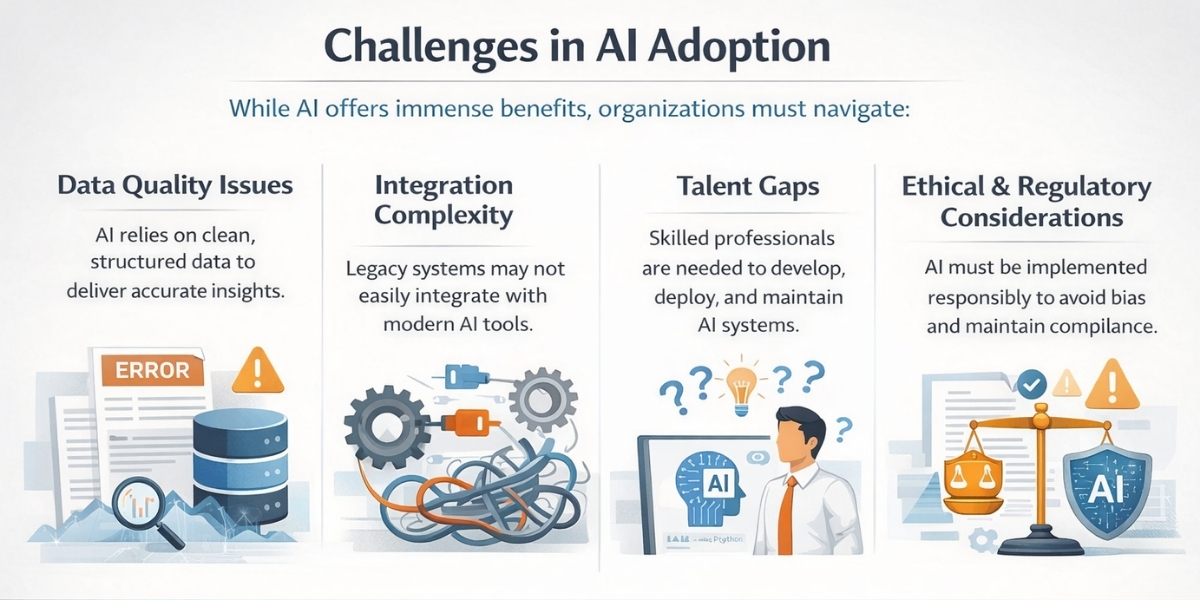
Common challenges include data quality, integration with legacy systems, talent shortages, and ensuring ethical or compliant AI use.
Written by: Empirical Edge Team