



ASP.NET Core is a modern web application development framework that allows developers to build scalable and powerful web applications. Two of the most popular frameworks in this ecosystem are ASP.NET MVC and Razor Pages. They both reside on the ASP.NET Core platform, yet utilize different design methodologies to create different types of applications.
This guide will clarify the significant differences between MVC and Razor Pages, including their respective advantages and their intended purposes, so that you can determine which framework to use for your next project.
What Is ASP.NET Core MVC?
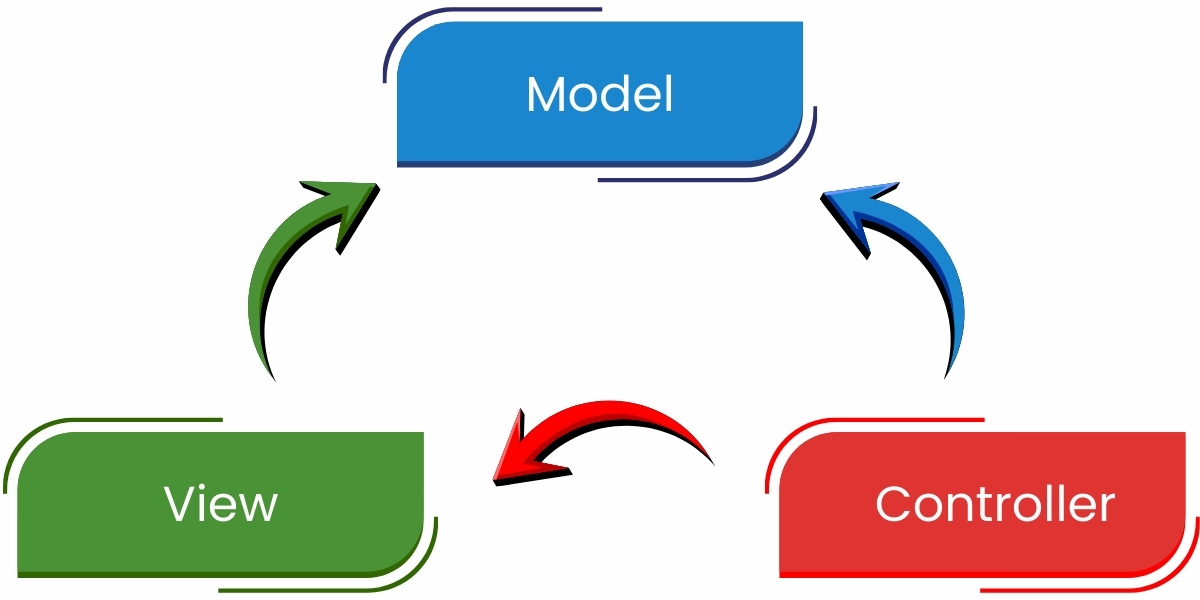
ASP.NET Core MVC framework is structured based on the Model-View-Controller (MVC) design pattern and divides the app into 3 different and interrelated components:
- Model: Provides the application with business logic and data processing functions
- View: Represents the end-user interface (UI)
- Controller: Accepts end-user input and communicates with both the model and view components of the application.
By providing separate layers of concern, MVC is particularly suited to support the building of large-scale, complex, and/or data-intensive applications.
Advantages of ASP.NET Core MVC
- Layered Architectural Component Responsibilities
- Greater Flexibility in Application Workflow Design
- Excellent Testability Support
- Excellent for Enterprise Level Applications
- Flexible Application Routing and Architecture
Applications built with MVC are ideal for those needing to manage complex business flows and process large amounts of data throughout the development and testing lifecycle.
The Razor Pages Development Model
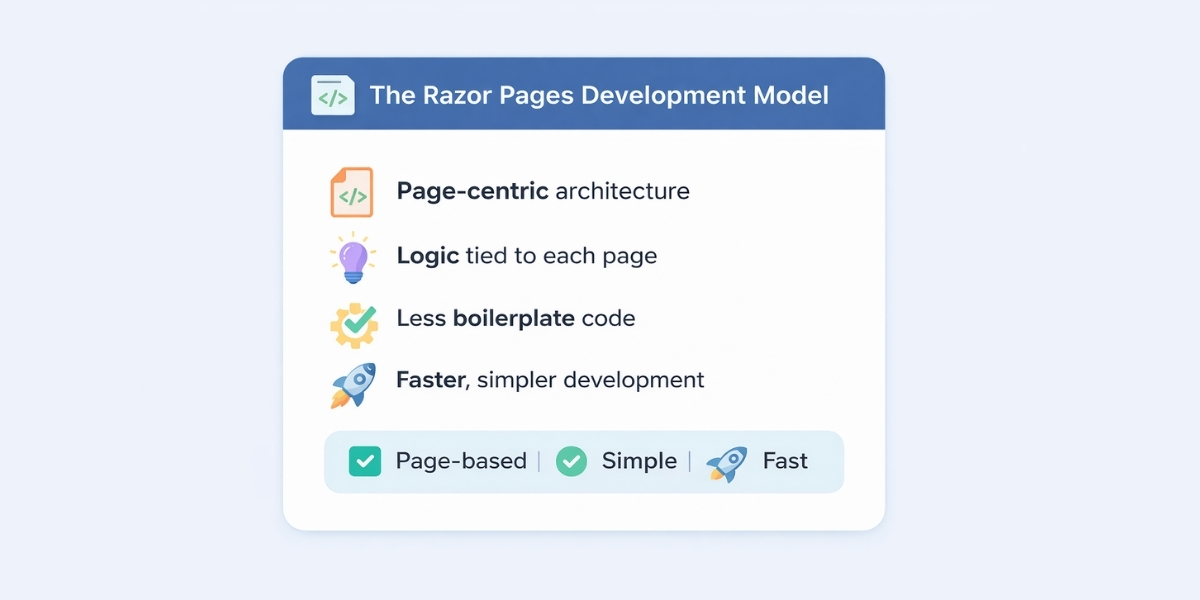
Razor Pages are new page-oriented programming model available through ASP.NET Core. Razor Pages use a single file to contain both UI and page-specific logic rather than separating the page controller as is done with MVC.
Because Razor Pages are viewed as providing a more straightforward approach to developing a page in ASP.NET Core and are more easily learned by developers new to ASP.NET Core, they provide an easier learning curve than MVC.
Advantages of Razor Pages
- Basic Page Development, No High-Level Logic Needed
- Reduced Amount of Boilerplate Code
- Accelerated Application Development Timelines, Suitable for Smaller Applications
- Better Readability and Maintainability of the Code
- Designed for CRUD and Forms Based Applications
Differences Between ASP.NET Core MVC and Razor Pages
1. Architecture Approach
MVC utilizes a controller-centric architecture, while Razor Pages uses a page-centric approach. This means that in MVC, developers organize their application logic around controllers, whereas in Razor Pages, developers organize their application logic around the specific page being served.
2. Development Complexity
MVC introduces more structure into the development process than Razor Pages and is therefore potentially more complex for smaller applications. Conversely, Razor Pages eliminates the need for controllers in certain situations, thereby easing some of the difficulties associated with building applications using MVC.
3. Learning Curve
The learning curve associated with Razor Pages is shallower than that of MVC, making it a better option for beginners. With MVC, developers must first understand the concepts of routing, controllers, and views before they can become proficient in using the framework. As a result, it may take developers longer to achieve proficiency in MVC than in Razor Pages.
4. Scalability
For larger-scale or enterprise-grade applications, MVC is a better fit than Razor Pages; however, Razor Pages can still be used effectively for smaller- to mid-sized applications. However, as the application grows, Razor Pages may become difficult to manage all within a single project.
5. Maintainability
MVC has greater long-term maintainability for complex applications than Razor Pages, which are simpler to maintain due to their localized nature.
ASP.NET Core MVC is a good choice for:
- Large-scale or enterprise-level applications
- Dealing with complex business logic
- Managing advanced routing requirements
- Creating RESTful APIs in addition to web views
- Achieving high levels of testability and flexibility
In conclusion, MVC provides more architectural flexibility than Razor Pages, thus making MVC a better choice for enterprise-grade software development.
Razor Pages can be beneficial in the following scenarios:
- When developing smaller and/or mid-sized applications
- When creating content-oriented/form-based websites
- When looking to speed up the development process with a minimum amount of configuration
- For performing simple CRUD operations
- When developing is easy to understand and straightforward.
A team that focuses on speed and simplicity can reduce development time significantly using Razor Pages.
Performance Related Issues
Razor Pages, just like ASP.NET Core MVC, are built on top of the ASP.NET Core Runtime, so the performance gap is negligible. The performance of an application typically relies more heavily on:
- The design of an application
- Database Queries
- Caching Techniques
- The hosting environment
While having the right architectural design can greatly impact how maintainable or scalable an application will be, it will have little impact on the raw performance of an application.
Security Features Shared by Both Frameworks
In addition, both frameworks share the same security features provided by the ASP.NET Core framework, including:
- Authentication and Authorization
- Data Validation
- Protection from Common Security Vulnerabilities
- Secure Configuration Options
While there are many security methods provided by the framework that allow for secure implementations of secure applications, the success of any secure implementation highly depends on the development practices of the developer, not on the framework itself.
Are MVC and Razor Pages Compatible?
Yes. Developers of ASP.NET Core can leverage both MVC and Razor Pages in a single application. This is useful when:
- Working with an Existing Application and Simply Adding Pages to It
- Gradually Migrate Teams away from MVC towards Razor Pages over time
- Developing Different Modules with varying levels of complexity
This hybrid approach makes ASP.NET Core exceptionally adaptable.
Choosing the Right Framework
When selecting between ASP.NET Core MVC or Razor Pages as your development framework, consider the following factors:
- The size and complexity of the project.
- The level of experience of the development team.
- The anticipated long-term maintenance requirements of the project.
- The amount of time you have available for development.
- The amount of scalability that is required for the project.
Each of these factors will have a different impact on which framework is best for your needs.
Conclusion
ASP.NET Core MVC and Razor Pages are both effective frameworks for building modern web applications. ASP.NET Core MVC provides more structure and scalability for complex projects and is, therefore, better suited for larger or more involved applications. However, Razor Pages allows for a faster, simpler, and more efficient approach to developing simple or “page-oriented” applications.
By understanding the advantages and disadvantages of both approaches, developers can make more informed choices that will result in better-built, easier to maintain applications.
Frequently Asked Questions
Yes. Both MVC and Razor Pages are fully supported by Microsoft and include built-in security features such as authentication, authorization, data validation, and protection against common vulnerabilities.
Razor Pages is often more cost-effective for smaller projects due to faster development time. MVC is more cost-effective for large systems because it supports scalability, structured maintenance, and long-term growth.
Empirical Edge analyzes business needs, scalability goals, and integration requirements to recommend and build the ideal ASP.NET Core solution using MVC, Razor Pages, or a hybrid approach.
Written by: Empirical Edge Team