



AI is a reality in 2026; it has gone from being something to come to being a key element of many current web apps.
AI will be used to create custom experiences for users and automate processes intelligently; therefore, AI will have a very large effect on how businesses create, scale and optimize online products. Today’s companies no longer ask themselves, “Is there an opportunity for us to use AI?” but rather “When can we get it implemented?”
This guide will provide the following information:
✔ What does AI integration into web applications mean?
✔ Real Data: Why AI is Dominating Web Development
✔ Top Advantages of Integrating AI into Your Website
✔ Use Cases of AI in Web Applications
✔ Successfully Integrating AI Into Web Applications
What does AI integration into web applications mean?
The term AI integration refers to adding smart capabilities to web applications via technologies such as:
- Machine Learning (ML)
- Natural Language Processing (NLP)
- Computer Vision
- Predictive Analytics
Adding these characteristics to a Web Application allows it to automatically learn, adapt, and make decisions for itself.
Examples of AI Integration in a Web Application could include:
- Customer Support Chatbots
- Product Recommendation Engines
- Fraud Detection Systems
Real Data: Why AI is Dominating Web Development
- 50% of new web projects include AI components
- 45% of developers use AI for coding automation
- AI can reduce development time by 30–55%
- Around 25% of applications already use AI
This shows AI is not optional—it’s a competitive necessity
Top Advantages of Integrating AI into Your Website
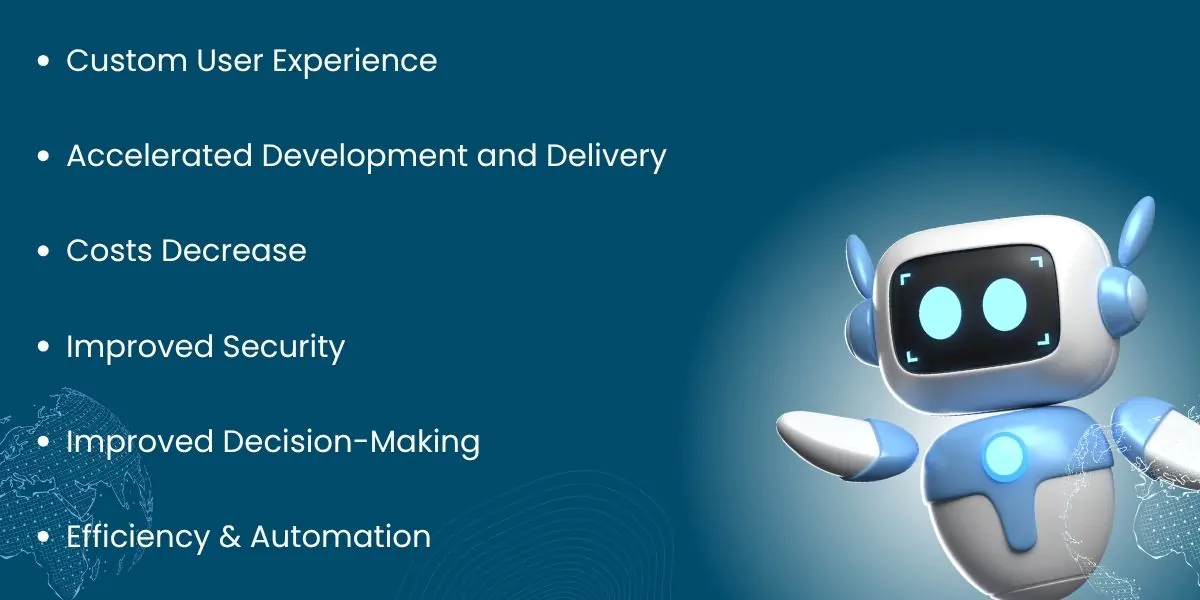
1. Custom User Experience
AI can identify how users behave and provide:
- Recommended Products
- Dynamic Content
- User Specific Dashboards
Some popular websites using AI personalized experiences include Netflix and most online shopping websites
2. Accelerated Development and Delivery
AI tools automate:
- Automation of Code
- Testing
- Debugging
This saves time during the development stage and allows for faster product launches
3. Costs Decrease
- Fewer Manual Tasks
- Fewer Mistakes
- Lower Maintenance Costs
AI reduces the amount of money wasted on overhead through the reduction of routine tasks
4. Improved Security
AI identifies:
- Fraudulent Activity
- Suspicious Behavior
- Cyber Threats
By using AI systems, you can improve your security through the identification of risks in real time
5. Improved Decision-Making
AI uses predictive analysis to:
- Predict Trends
- Analyze Customer Data
- Improve Business Strategy
6. Efficiency & Automation
AI will automate:
- Customer Support
- Data Processing
- Workflow Management
This will increase productivity and reduce the likelihood of human error.
The following are the most popular applications of Artificial Intelligence in web applications:
Use Cases of AI in Web Applications
1. Virtual Assistants (AI Chatbots)
- Provide 24/7 support for customers
- Provide support for customer inquiries immediately
- Reduce customer support costs
These applications are used extensively by SaaS, eCommerce, service based platforms and various other industry sectors.
2. Recommendation Systems
- Provide personalized product or content recommendations to customers
- Increase customer conversion rates
About 45% of all personalized features within eCommerce applications are developed through the use of Artificial Intelligence
3. Predictive Analytics
- Sales Forecasting
- Customer Analysis or Customer Behavior Analysis
- Risk Management
4. Smart Search (AI Search Engines)
- Semantic Search
- Voice Search
- Contextual Result Set
AI helps provide search engines with an understanding of the customer or user’s intent rather than just using keywords in the same way as traditional search engines do.
5. Fraud Detection and Security Systems
- Real-time transaction monitoring
- Real-time transaction validation
- Threat prevention
6. Content Generation (AI)
- Automated Blogs or Blog Content
- Automated Product Descriptions
- Automated Emails for Marketing
Approximately 30% of all websites have content on them generated by Artificial Intelligence.
7. Analytics Dashboard (AI Analytics)
- Real-time reporting
- Data visualization
- Business Intelligence Reporting
Real-Life Example
Example of AI in E-Commerce
An online retailer integrated AI in an E-Commerce site to address:
Challenges
• Low conversion rates
• Low customer engagement
• High customer support costs
AI Solutions Implemented
• Product recommendations
• AI customer service chatbots
• Predictive analytics for sales forecasting
Results
• Increased conversions by 35%
• Reduced cost of customer service by 40%
• Increased customer retention rates
This holds true for all companies; therefore, understanding how to implement AI will also provide significant improvement in both revenue generation and productivity/performance/efficiencies.
Barriers to Implementing AI
Businesses should also understand the following barriers before they implement AI in their organization.
Data Quality
If you have bad data, you will have a bad AI application (i.e., failure).
Large Initial Investment for Setup Costs
There are many costs associated with AI implementation (e.g., tools, infrastructure, and knowledge/expertise to develop).
Complexity of Blending AI with Current IT Systems
You will need skilled developers and architects to help you integrate AI successfully into your existing IT systems, as well as an architecture that will allow you to do so.
Compliance Issues with the European Union GDPR (General Data Protection Regulation Law) (For More Information)
Make sure you understand what those GDPR laws entail in regard to your use of (AI and other technologies).
Successfully Integrating AI Into Web Applications
How To Do It Step By Step
Define The Business Goals
Identify clearly what you expect to accomplish using AI technology. Will it be to enhance customer satisfaction, automate processes, increase conversion rates, or lower operational costs? Clearly established goals will help ensure your implementation efforts align with measurable results for the business.
Identifying Use Cases for AI
Map the various capabilities of AI to the actual business problems facing your organisation. Are you using chatbots for customer support? Are you using recommendations based on previous purchases to tailor an experience? Will you be using predictive analytics to help make better decisions? Focus on implementation of high-impact, practical use cases as opposed to implementing AI just to follow along with the trending nature of AI.
Selecting The Right Tools (API Or Custom Development)
Decide whether you would like to utilize an existing, ready-made AI API (which will likely save you time while also saving on labour costs) or to develop your own custom AI model (providing you with greater control and a highly tailored solution). This decision will depend on your available budget to develop the product, complexity and future scalability of the application.
Data Quality
Before you can train your model(s), you must provide your model(s) with clean, structured and relevant data. Remember that poor quality data can lead to inaccurate predictions as well as wasted money on developing unwanted and unusable applications.
Develop A Stage One Minimum Viable Product (MVP)
Avoid the temptation of building an AI solution at full scale prior to first developing and testing an initial version that can prove your concept. MVP development allows you to validate your concept, lower your development-related risks and gain valuable real-world validation from actual users before making additional investments.
Scale gradually
Once your MVP proves successful, expand AI capabilities step by step. Optimize performance, add advanced features, and integrate across your system to maximize impact over time.
Ready to integrate AI into your web application?
Frequently Asked Questions
AI integration involves adding intelligent features like chatbots, recommendations, and predictive analytics to web apps.
AI improves user experience, reduces costs, enhances security, and automates processes.
Costs vary based on complexity but typically range from $5,000 to $50,000+ depending on features and scale.
AI is widely used in eCommerce, healthcare, finance, SaaS, logistics, and education.
Yes, AI helps small businesses automate tasks, improve efficiency, and compete with larger companies.
Written by: Empirical Edge