

As more and more organizations are entering into the digital arena of business (e-commerce), a number of companies are beginning to recognize the need to invest in a more tailored approach when it comes to their operations. In doing so, it would enable these companies to realize increased operational efficiency, increased profitability, established operational process, and establish a platform for future growth. By doing this, organizations will migrate away from the traditional approach of using ‘box type’ software products, which will no longer be an option in order to maximize profits and longevity of the organization.
Custom Software is designed and developed based on the company’s workflow, challenges and overall business goals. By selecting a custom solution, an organization will be able to take advantage of improved operating efficiencies, streamline business operations, reduce costs and create a foundation for further growth. A more structured approach to developing custom software development will allow for a more efficient operation of the organization. Below are some examples of the advantages of utilizing Custom Software Development to achieve long-term operational efficiency and success.
1. Customized Solutions That Align With a Company’s Operations
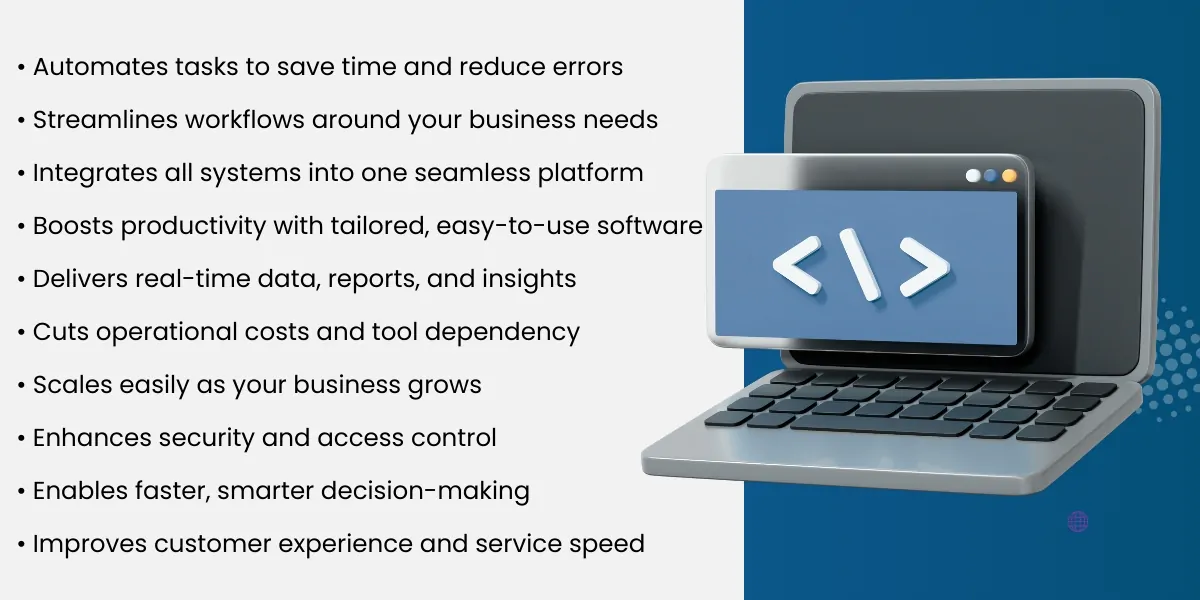
Businesses are unique in their operations and work processes. Custom software development allows for the elimination of unnecessary steps (due to the automation of processes), allowing employees to focus on strategic tasks rather than dealing with manual entry or the limitations of software.
Through the alignment of technology to actual operational needs, companies can reduce the amount of errors, increase speed of completion of tasks, and have a more efficient and streamlined internal operation. By customizing automation functions, it frees staff from societal and administrative responsibilities, allowing teams to put more focus on strategic initiatives.
2. Automation of Tedious and Repetitive Tasks
As described above, automation is a major driver of increased efficiency through increasing time savings versus increasing error rates. Businesses can now automate various processes from data entry to reporting, to creating invoices to updating stock levels, to sending customer emails, and system monitoring.
Automating these tasks minimizes chances of human error, makes the company’s information more reliable and consistent across departments. In addition to faster cycle times and increased productivity, automating has resulted in reduced operational costs through lower staffing costs.
3. Integrating Systems Seamlessly
Many companies face the issue of unconnected systems—Customer Relationship Management (CRM) systems, Enterprise Resource Planning (ERP) systems, Financial Systems, Marketing Tools and Customer Platforms that don’t have good communication. Custom software provides one solution to integrate all of a company’s systems so that they can communicate.
When companies use custom software, they have access to real-time data sharing between departments through unified dashboards and streamlined workflows. Employees no longer waste time switching between systems or manually reconciling data. As a result, employees collaborate more efficiently and make faster, better decisions.
4. Custom Software is Scalable as your Business Grows
As the business grows, the off-the-shelf software will typically create limitations to the growth of the company. Whereas, custom software was created with the intent to allow for future growth and will easily allow for the addition of new features, users, modules and integrations.
Regardless of whether the business is expanding into new markets, increasing transaction volumes, or introducing new services, custom software grows with the business without significant disruption. This ensures that efficiency is maintained even during times of accelerated growth.
5. Data Management and Reporting Improved
Customized software consolidates all of a company’s data into a single structured database system making that data easier to manage, analyze and secure. The use of advanced dashboards and automated reporting capabilities provides the business with real-time insights into their performance, sales, operations, and customer activity.
With accurate, accessible data, leaders make faster and smarter decisions. This eliminates guesswork, reduces operational risks, and supports strategic planning—all of which contribute directly to business efficiency.
6. Increased Employee Productivity
By developing software that aligns with how employees operate, it becomes intuitive for employees to be more productive easily. Custom built systems allow employees less frustration, to have an easier navigation experience, and to remove unnecessary steps from their day-to-day.
These tools are built around an employee’s “job,” helping them to operate quickly and accurately when it comes to completing their job duties. Reduced training times and increased adoption of technology will create greater confidence in employees using digital technologies.
Ultimately, as a result of successful implementation, a properly developed Custom Software Solution is only a tool to enhance productivity, not a hindrance.
7. Improved Customer Experiences and Quicker Service Deliveries
Custom Software does not only help a business improve its internal operational processes, but helps improve a customer’s experience with the firm. Businesses can implement Customized Customer Portals, Automated Support Mechanisms, Self-Service Platforms, and Real-Time Tracking Mechanisms.
This leads to quicker turnaround times for responses, fewer service errors, improved communication and a more satisfied customer base. This also creates an avenue for establishing trust, loyalty, and ultimately a long-term relationship between the business and their client.
8. Lower Long-Term Costs
Even though building a customized software solution typically requires a larger capital investment upfront, it greatly decreases a business’s long-term financial expenditures. Because the company is not subject to annual licensing fees for a custom solution and does not rely on a collection of different tools for various processes, they eliminate many of the inherent inefficiencies associated with using software not designed for the specific needs of the company.
Additionally, maintenance of a Custom Solution centers on the features necessary to fulfil the business’s operational duties and subsequent updates are introduced in a planned manner. Consequently, over time, a Custom Software Solution creates the largest return on investment through reduced costs, streamlined operations and providing the necessary tools for creativity.
9. A Greater Level of Protection and Compliance
Generic software is built with a large market in mind and, therefore, opens up the company to increased exposure to mass cyber attacks. Through custom software development, you have more options to control the security framework, assign user permissions, encrypt sensitive data and establish compliance procedures.
You can develop systems that meet your specific industry’s needs and comply with your internal security requirements. This significantly reduces the chances of a data breach, minimizes downtime and reduces your company’s exposure to legal liability; thus, protecting your business’s operation and reputation.
10. Competitive Advantage through the Ability to Innovate
Custom software gives businesses the opportunity to innovate, as it allows them to create new capabilities, features, workflows or even a completely new type of service faster than competitors that use “one-size-fits-all” solutions.
By being able to adapt, optimize and innovate custom software solutions, companies can stay ahead of their competition by being more efficient. They also gain the advantage of having an operational efficiency that translates into a strategic advantage.
Summary
Custom software is no longer a luxury; it is a necessary strategic investment. By providing a customized workflow, automating processes, integrating seamlessly with other systems and providing options for future business growth, custom software significantly increases the overall efficiency of a business.
It changes how employees work together, how customers interact with them and how leaders grow their business. Companies that adopt custom-designed solutions are positioning themselves to achieve long-term, sustainable success and growth and to ensure they are evolving digitally for years to come.
Ready to improve efficiency and reduce costs with tailored software? Empirical Edge builds powerful custom systems that work the way you do.
Frequently Asked Questions
Yes. Custom software is tailored to your operations, offers better scalability, integrates seamlessly with your systems, and avoids unnecessary features and long-term licensing costs.
Commonly automated processes include data entry, billing, inventory management, customer support, reporting, HR operations, sales tracking, and system monitoring.
Absolutely. Custom software is built with scalability in mind, allowing you to add users, features, integrations, and capacity as your business expands.
Yes. Custom solutions seamlessly integrate with CRMs, ERPs, accounting systems, marketing tools, cloud platforms, and third-party APIs to create a unified ecosystem.
Empirical Edge delivers end-to-end custom software solutions, including consulting, UI/UX design, automation, system integration, cloud deployment, and long-term support to maximize efficiency and growth.
Written by: Empirical Edge