
5G is much more than simply an improved means of access to mobile networks; it’s a tool that provides developers with new ways to create, innovate and ultimately create new applications for business and end users.
The 5G revolution is one of the greatest advancements in technology since the advent of the Internet, and it gives developers significantly more options to develop, design and deliver new applications than ever before.
With 5G networks continuing to be deployed around the globe, the Android application development market is entering a bold new future, with application capabilities, speed and overall user experience way beyond what we’ve come to expect from mobile applications. The following sections will provide insight into the development of 5G and how this will impact your business.
The Power of 5G
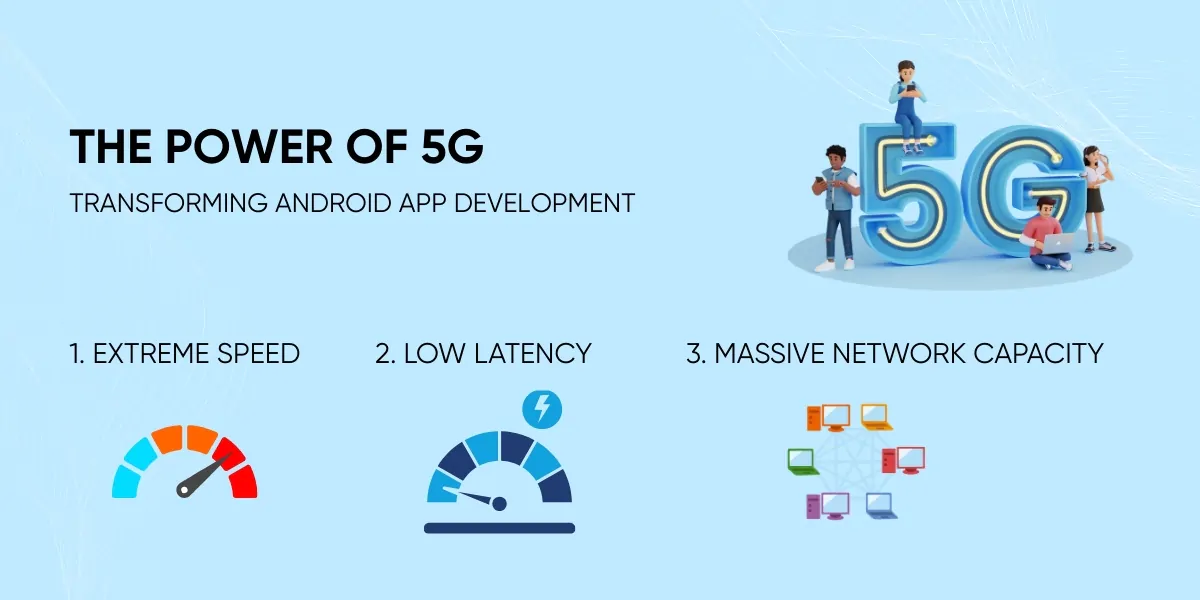
At the core of 5G power are three key changes:
1. Extreme Speed
With speeds of 10Gbps, 5G networks are almost 100x faster than 4G LTE. Using this technology, app developers will now be able to provide instant load times for applications, provide users with much more detailed content as well as create user experiences that were previously unattainable.
2. Low Latency
5G has the capability to deliver latencies as low as 1 millisecond and to allow real-time responsiveness. This is especially beneficial for developing applications that require immediate responses such as gaming, Internet of Things (IoT), augmented reality (AR) and virtual reality (VR), and telemedicine.
3. Massive Network Capacity
5G supports millions of devices per square kilometer, making it ideal for the growing Internet of Things ecosystem.
These combined capabilities make 5G a major milestone for Android developers looking to build modern, future-ready applications.
The Impact of 5G on Android Development

1. Seamless Real-Time Interaction
The low-latency, high-speed capabilities of 5G will enable seamless real-time interaction. Applications such as:
- Multiplayer mobile games
- Video Conferencing
- Remote Control Robotics
- Live Streaming
can be developed using 5G technologies and will create a new level of smooth, lag-free user experience. Developers will be able to leverage 5G capabilities to create even more feature-rich apps without having to worry about network delays.
2. Augmented Reality (AR) and Virtual Reality (VR) Are Going to be Mainstream
AR and VR have great potential but have historically been limited due to connectivity limitations. With 5G, these limitations are gone with capabilities such as:
- Real-Time Rendering
- Low-Lag Animation
- Cloud Based Processing for AR/VR
- Development of Immersive Experiences
5G enables Android developers to create apps for many different industries including education, health care, retail, gaming, and tourism that utilize immersive technology.
Examples include:
- Virtual Try-On Apps
- AR Navigation
- VR Classrooms
- Immersive Shopping Experiences
3. Video Streaming and Live Content Will be Enhanced with High Quality and No Buffering
Video is the primary driver of mobile bandwidth consumption, and the capabilities of 5G are designed for streamlined and lag-free video streaming.
Developers can now build video-centric applications that allow for:
- 4K and 8K Streaming
- 360 Degree Video
- No Buffering
- Interactive Live Streaming
The above represents new opportunities for Android developers in entertainment, education, fitness, and live commerce.
4. Mobile Applications Using Cloud Computing
With the launch of 5G, the potential for using the power of the cloud has greatly increased for mobile users. Mobile app developers will now have the ability to use the power of the cloud to run compute-intensive applications (especially) AI applications.
With the mobile app developer’s ability to leverage cloud computing, the size and speed of mobile applications will increase dramatically. Mobile applications are also being enhanced with AI to provide greater functionality to users. As a result, we will begin to see a trend toward “cloud first” mobile applications.
5. Mobile Gaming Will Be Enhanced by 5G
Mobile gaming will benefit significantly from the introduction of 5G. Game developers will be able to create high-performance gaming experiences that offer:
- Real-time multiplayer experiences
- Cloud-based gaming, thereby eliminating the need for high-performance devices
- Lightning-fast download times
- Low or no-latency experiences.
The mobile version of Google’s Android Operating System will also see an influx of AAA games that will be optimized for mobile devices.
6. IoT and Smart Devices Will Be Smarter with 5G
Because 5G offers improved speed, capacity, and lower latency, every IoT application will have a substantial improvement due to the increased use of 5G networks. This includes:
- Smart Home Devices
- Connected Vehicles
- Smart City Devices
- Wearables
- Industrial Automation
Android Developers will now be able to develop applications that manage, control, and monitor a range of IoT devices in real-time, providing instant updates and ongoing synchronization.
Challenges Developers Need to Prepare For
With the introduction of 5G technologies for mobile phones, there will also be new mobile application development challenges due to the speed and ability of 5G.
1. Demands for Increased Performance from Users:
Because of the high-speed, users will require almost instantaneous response times. As a result, mobile application developers must thoroughly optimize their applications to achieve optimal performance at 5G speeds.
2. Updated Development Tools and Skills
As a result of the increased capabilities of mobile phones with 5G support, app developers will need to use updated development tools (SDKs) and techniques.
3. Device Compatibility Between 5G and Non-5G Devices
Many Android devices are not 5G compatible; therefore, app developers should develop for both hybrid (so they work on both types of devices) and 5G app development.
4. Increased Need for Thorough Testing of Mobile Applications:
For mobile applications that include real-time functionality, cloud-based processing, and AR/VR functionality, users should expect a thorough and rigorous testing phase prior to the release of a mobile application.
If developers start working on these new abilities now, they can take these obstacles and turn them into new opportunities for innovation.
The Future of Android Applications in a 5G World
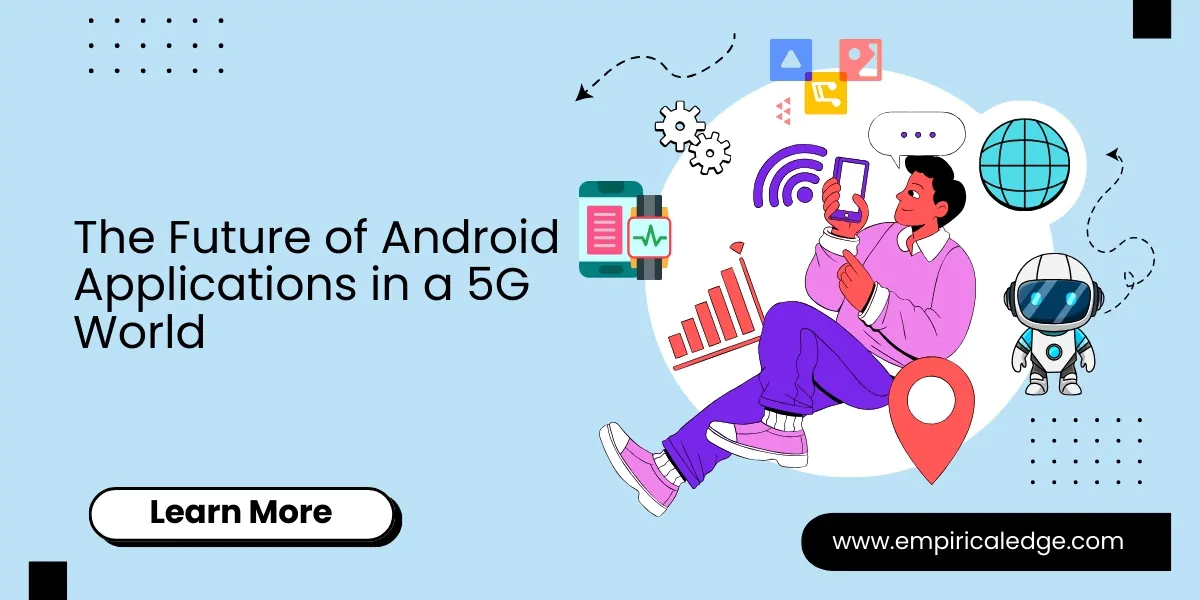
5G technology will provide the impetus for the next generation of Android applications that will provide users with the opportunity to develop the user’s desired experience through:
- Highly personalized experiences.
- Real-time AI and machine learning.
- Highly advanced location-based services.
- High-definition media and content.
- Fully integrated into the Smart device ecosystem.
With the increase in global adoption of mobile devices using 5G technology, the demand for mobile applications that use 5G technology will increase significantly.
Conclusion
5G is more than just a network upgrade—it is a transformative force reshaping the entire Android development ecosystem. With lightning-fast speeds, ultra-low latency, and massive connectivity, 5G empowers developers to build highly interactive, immersive, and data-rich mobile applications.
Android developers who embrace 5G early will gain a competitive edge, delivering next-generation experiences that meet the expectations of tomorrow’s users.
Frequently Asked Questions
5G enables high-quality AR/VR, real-time gaming, live video streaming, IoT integration, smart city apps, remote healthcare solutions, and AI-powered mobile applications.
Not always. Existing apps can be optimized to leverage 5G capabilities, but advanced features like real-time analytics, immersive media, and edge computing may require modernization.
While initial development for 5G-powered apps may cost more due to advanced features, businesses benefit from long-term ROI through automation, scalability, and enhanced user experiences.
Businesses should assess target users, device compatibility, data security, backend infrastructure, edge computing needs, and long-term scalability.
Empirical Edge delivers future-ready Android app development, 5G optimization, real-time system integration, AI-powered mobile solutions, and secure, scalable architectures.
Written by: Empirical Edge Team