



In this age of instantaneous communication and interactive web experiences, real-time applications include chat tools, collaborative tools, live dashboards, gaming tools, and IoT systems with the need for low latency, high concurrency and scalable deployments.
With its event-driven, non-blocking I/O architecture, Node.js has become a preferred choice for real-time applications. But building high-performance real-time apps is not just about using Node.js; we must consider optimizing each application architecture layer for performance, reliability, and scale.
Why Does Node.js Lead in Real-Time Applications?
- Event-Driven –- Thousands of simultaneous connections can be efficiently managed to enable real-time communication in Node.js application architecture.
- Non-Blocking I/O –- Database queries, file operations, and API calls can be async-driven allowing even more efficiency and performance and avoiding bottlenecks.
- “Just add another” Microservices –- While microservices architecture is a great deployment technique for applications, Node.js is a great framework for building modular components.
- Ecosystem – Node.js developer tools like Socket.io, Express.js, Fastify, and NestJS provide developer frameworks for all types of communication using web based and real-time performance.
- Universal – Node.js user interfaces and APIs are compatible with nearly any front-end framework, database and third party.
Fundamental Approaches for Scaling Node.js for Real-Time Usage
1. Event Loop Management
- Be careful not to block the event loop when performing synchronous tasks.
- Use async/await or promise to help manage I/O.
- If running into an I/O bottleneck, track event loop latencies using clinic.js or perf_hooks built into node.
2. Efficient Resource Handling
- Make use of connection pooling with databases.
- Make frequent data accessible within Redis or an in-memory cache.
- Monitor memory utilization with processes that run for a long time. Avoid memory leaks.
3. Load Balancing/Clustering
- Utilize Node.js cluster module or PM2 process manager to evenly distribute traffic across the CPU cores.
- Implement reverse proxy (like Nginx or HAProxy) to help your app scale horizontally.
- When deploying services with Node.js, prefer a stateless architecture that limits application scenarios entangled with shared state.
4. WebSockets & Real-Time
- Utilize WebSocket or Socket.io for low latency bi-directional communication.
- Enhance for high concurrency applications with message broadcasting and messaging throttling.
- Consider combining these with publish/subscribe patterns using cevent-driven updates.
5. Database & Queries
- Utilize non-blocking drivers for MongoDB, PostgreSQL, or MySQL.
- Optimize indexes and queries to work below the R/W throughput threshold.
- Consider cache layers (Redis, Memcached) to ease your performance burden on the database.
Typical Issues with Node.js Real-Time Applications
- Managing high concurrency by having thousands of simultaneous connections.
- Memory leak in long-running processes.
- Data consistency across distributed services.
- Unexpected load spikes and traffic bursts.
- Latency in streaming or collaborative applications.
Tips for Making High-Performing Real-Time Node.js Applications
- An asynchronous non-blocking architecture that won’t slow you down.
- Create modular microservices that can be scaled and maintained independently.
- Use caching strategies that lessen the load on your database and speed up response time.
- Use API gateways and message queues to create event-driven architectures.
- Constantly monitor and alert on performance so you may be proactive.
- Optimize your code and manage your dependencies (delete packages, modularize code, keep your dependencies up to date).
Examples of Real-Time Applications Using Node.js
- Chat and messaging applications have to deliver messages with very low latency.
- Collaborative applications enabling the collaboration of documents like google docs in real-time.
- Online gaming, multiplayer games where events have low-latency synchronization.
- IoT dashboards that send alerts and monitor connected devices to achieve real-time monitoring of events.
- Financial trading platforms that provide updates at high frequencies for stock trading or crypto monitoring.
Our Node.js Real-Time Application Services at Empirical Edge
Empirical Edge powers high-performance and scalable Node.js applications that respond instantly with seamless user experiences.
We offer the following products/services
- Custom Node.js Development: Chat apps, collaborative tools, streaming service, dashboards
- Performance Optimization: Event loop tuning, caching, and query optimization
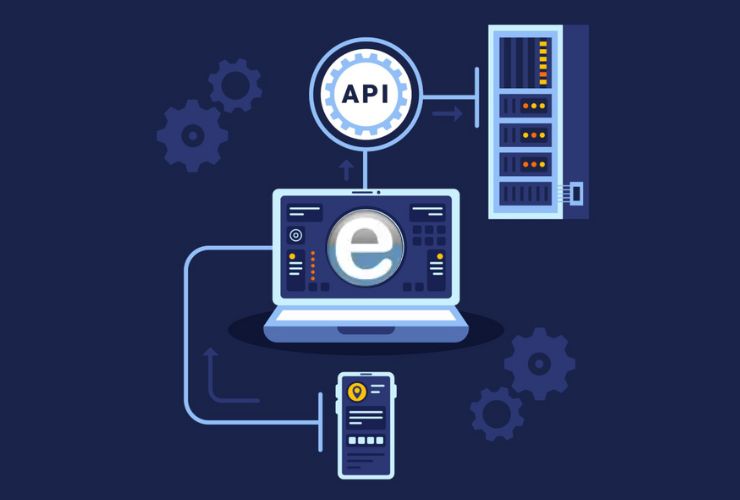
- Scalable Architecture Design: Microservices, clustering, cloud-native
- WebSocket & API Integration: WebSockets, REST, and GraphQL APIs
- Monitoring & Ongoing Support: Monitoring, alerts, and maintenance of your application to ensure high availability
Learn more about our Node.js Development Services
Conclusion
Fast, reliable, and scalable applications with real-time experiences depend on device and network speed, as well as user interactions. However, many downstream factors can impact the performance characteristics of a real-time application: event-driven architecture, utilization of historical data, etc…
Combining event-driven design and architecture with performance tuning of a Node.js application and scalable architecture will better ensure that real-time apps perform as your intended user experiences.
Empirical Edge is ready to power your next application. We embrace the challenges and ability of Node.js, and have real-time optimization strategies that will help you build applications that engage your users, scale seamlessly, and are ready for the future.
Ready to optimize your real-time application? Partner with experienced Node.js professionals to build fast, scalable, and reliable solutions that deliver seamless user experiences and support future growth.
Frequently Asked Questions
Node.js uses an event-driven, non-blocking I/O architecture that efficiently handles thousands of simultaneous connections, making it highly suitable for real-time communication.
Typical use cases include chat platforms, collaborative tools, online gaming, IoT dashboards, and financial trading systems that require low latency and high concurrency.
Best practices include avoiding event-loop blocking, using async operations, implementing caching, optimizing queries, and monitoring memory usage.
Load balancing distributes traffic across CPU cores and supports horizontal scaling, helping applications remain stable during high traffic.
WebSockets enable low-latency, bidirectional communication, which is essential for high-concurrency environments.
Common challenges include managing high concurrency, preventing memory leaks, maintaining data consistency, handling traffic spikes, and reducing latency.
Written by: Empirical Edge Team