


Today’s software development is fundamentally changing and evolving more rapidly than ever before due to the many technology advancements (e.g., Cloud Computing, Artificial Intelligence, Cybersecurity) and changing User behaviors, prior to today, the purpose of developing a software application only included Writing Code; today the purpose of developing a software application includes Creating an Intelligent, Scalable, and Secure Digital Ecosystem. In order to sustain their business’s ability to compete against their competitors, an organization must have an understanding of the most current software development trends to make sound Technology Investments.
This article will provide a review of the most relevant current trends being implemented in modern software development and the resultant effect of those trends on Digital Product and Enterprise System Development.
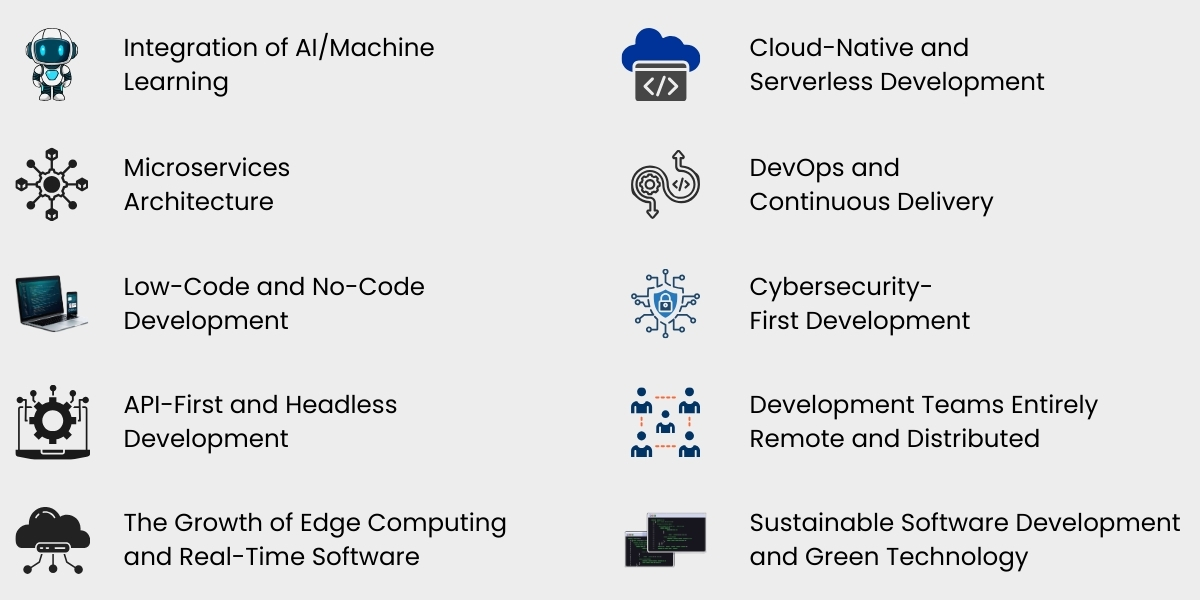
1. Integration of AI/Machine Learning
The use of Artificial Intelligence and Machine Learning has become an integral part of modern day software. Applications no longer simply have to execute a task, they now need to collect, analyze and apply information to Automate Processes and provide Personalized Experiences using AI/machine learning and AI-enhanced systems.
AI-driven Development Provides:
- Business Process Automation through Intelligent Automation
- Predictive Analysis and Real-time Information
- Customized Customer Experiences
- Advanced Fraud Detection and Cybersecurity Defense through AI-driven Systems.
Presently, there are a large number of examples of the impact of AI-driven software, from Recommendation Engines to Virtual Assistants, all illustrating a shift away from the historical model of software development.
2. Cloud-Native and Serverless Development
Cloud-native development refers to an application design method that takes advantage of the unique characteristics of Cloud environments to Implement applications designed specifically for Cloud environments. The emphasis with Cloud-native applications is on Scalability, Resilience, and Flexibility.
The main benefits of Cloud-native development include;
- On-demand Scalability.
- Reduced need for Organization-level Infrastructure Management.
- Traditional deployment cycles are much Faster.
- Enhanced disaster Recovery Capabilities.
To further streamline development and build Cloud-native Applications, the use of Serverless Architecture allows development teams to focus only on Functionality and leave the Management of the underlying Infrastructure to the Cloud Provider.
3. Microservices Architecture
The move from Monolithic Systems to Microservices Architecture is becoming more prevalent. This architectural style provides the ability to break your applications into smaller independent services that can each be developed, deployed, and scaled individually.
The advantages of Microservices can be seen in areas such as;
- Improved Resilience of Systems
- Faster Development Cycles
- Easier Upgrade Paths to Technologies
- Increased Scalability of Growing Platforms
Microservices provide enterprises with an opportunity for Long-term Agility and Innovation as they manage increasingly complex Systems.
4. DevOps and Continuous Delivery
DevOps is now more than just a buzzword—it has become an essential part of a successful software team’s Strategy. By integrating Development and Operations, Organizations gain the ability to deliver products to Market Faster, provide Higher Quality, and deliver Greater Reliability.
To implement Modern DevOps practices, organizations are employing the following techniques;
- Automated Testing and Deployment
- Establishing Continuous Integration and Deployment Pipelines
- Using Infrastructure as Code
- Implementing Real-time Monitoring and Feedback Loops
The use of these techniques has led to a dramatic reduction in Time-to-Market and improved Software Stability.
5. Low-Code and No-Code Development
There are two different ways to create applications using Low-code and No-code Development methods. Low-code and No-code Platforms are now available for everyone and enable anyone to build their own applications. Developers, however, benefit from this process as it allows them to spend less time building an application and focus on what they do best, which is creating software.
Lowers Costs of Development
The most significant benefit is that you can rapidly develop applications at a low cost. Developers can also create prototypes more quickly than ever before and innovate their way through product development. All of these benefits positively affect collaboration between the IT Team and Business Teams.
6. Cybersecurity-First Development
In recent years, Cybersecurity has become increasingly important. As cyber-attacks and regulatory requirements become more prevalent than ever, Cybersecurity is becoming ingrained in every stage of the software development process. A “Security by Design” mindset has become the norm for most development teams today.
The multifaceted approach to ensuring Cybersecurity includes:
- The Integration of Cybersecurity into Software Development Life Cycles.
- Automated Testing to Identify Vulnerabilities within Applications.
- The Use of Zero Trust Architecture.
- Data Protection Strategies.
With Proactive Cybersecurity, not only do organizations have confidence in the security of their systems, but they are also building the Trust of their Customers and Partners.
7. API-First and Headless Development
Developers have transitioned to creating applications based on the way that all modern applications communicate with other applications, systems, services, and devices. API-First Development enables the developer to scale, remain flexible, and provide ease of integration.
Headless Architecture separates the Front-End Presentation from the Back-End Logic of the application so that both areas can evolve independently, resulting in an Omnichannel experience, Faster User Interface Innovation, Seamless Third Party Integrations, Increased Scalability and Performance.
The benefits of Headless Architecture support the modern digital ecosystem’s need for applications to be designed to work in conjunction with one another.
8. Development Teams Entirely Remote and Distributed
The overall trend in software development is that it is now very much “remote first” due to the growth of cloud-based tools, version control systems, and collaborative platforms that allow easy communication with teams and customers around the globe.
Some of the benefits of using remote development teams include:
- Global availability of Talent
- Greater Productivity and Flexibility than ever before
- Speedy and Efficient Development Cycles
- Decreased Operational Costs than traditional in-house development
The Model of Remote Application Development and Distributed Software Development has become standard for Most Entrepreneurial and Enterprise Environment.
9. The Growth of Edge Computing and Real-Time Software
With the rise of the Internet of Things (IoT) and the growth of Real-Time Systems, Edge Computing is quickly becoming the most critical trend for the development of modern software. Edge Computing applications process data where it is created, reducing latency, increasing speed, and improving reliability.
Edge Computing software includes:
- Real-Time Analytics
- Smart Devices and Automation
- Industrial Internet of Things (IoT)
- High-Performance Applications
The emergence of Edge Computing Technology is crucial for Companies to leverage their Investments to enhance their Data Collection and Decision Making Capabilities.
10. Sustainable Software Development and Green Technology
Sustainable Software Development is a growing topic for software engineers. The focus is on developing energy-efficient applications, using computer resources efficiently, and creating environmentally responsibly designed infrastructures.
Green Software Development includes:
- Development of Highly Efficient Algorithms
- Cloud-based Resource Optimization
- Eliminating Waste from the Development of Computational Resources
- Creating Long-Term Sustainable Software Development Systems
The emphasis on an Sustainability of Development. Aligns Technology and Sustainability Goals for Corporations and the Environment.
Conclusion
Modern software development is being reshaped by intelligent automation, cloud innovation, advanced security practices, and evolving collaboration models. Organizations that embrace these trends gain the ability to build scalable, resilient, and future-ready applications.
By staying ahead of these developments, businesses can reduce risk, accelerate innovation, and deliver digital solutions that meet the demands of tomorrow’s market.
Stay ahead of the tech curve with solutions built for tomorrow’s challenges. Empirical Edge brings modern software trends to life — let’s transform your vision into innovation today.
Frequently Asked Questions
Modern software development trends help businesses build faster, more secure, and scalable applications. By adopting the right technologies early, companies reduce long-term costs, improve customer experience, and stay competitive in a rapidly changing digital market.
Trends such as cloud-native development, AI integration, low-code platforms, microservices architecture, and cybersecurity-first design can significantly improve performance, scalability, automation, and system reliability—directly affecting project success and ROI.
Yes. Today’s development trends prioritize API-driven and modular architectures, making it easier to integrate new solutions with legacy platforms while avoiding major disruptions to your business operations.
Empirical Edge analyzes your business goals, existing systems, and growth plans to design modern, secure, and scalable software solutions tailored to your needs—ensuring you adopt the right trends, not just the newest ones.
Written by: Empirical Edge Team