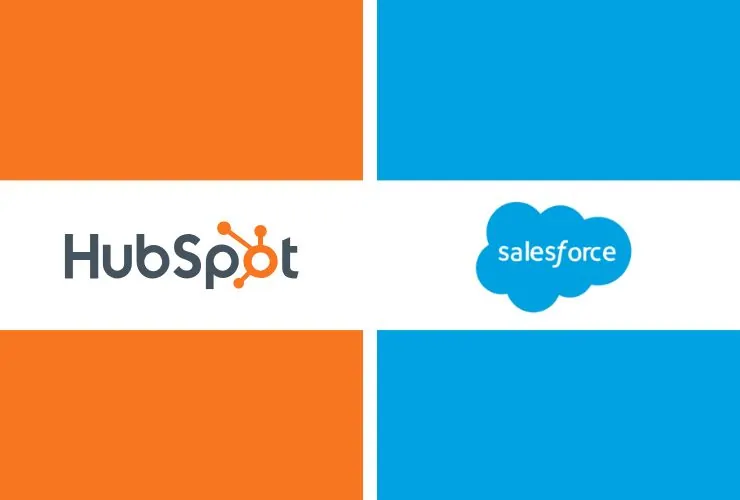


Making a decision about a Customer Relationship Management (CRM) software is no small feat for businesses. While HubSpot and Salesforce are among the most common CRM options — both provide a strong set of tools for tracking leads, automating workflows, and driving revenue — each has different capabilities that can impact the CRM user experience. The question is, which one is going to be the best choice for your business?
In this post, we will compare some of the strengths of each platform, in order to help you make a decision.
What Is HubSpot?
HubSpot is a leading inbound marketing, sales, and service software that allows users to integrate all aspects of inbound marketing, from A-Z, into one easy-to-use platform. Good for integration of marketing automation tools, HubSpot allows users to install codes to web pages and append social media feeds into their layout. HubSpot is well-suited for small- to mid-sized business who want an easy way to manage their customer database and sales process in one scalable tool.
Benefits of HubSpot:
- User-friendly system that is simple to set up
- Free CRM with basic functionality
- Marketing automation tools are integrated into the system software
- Good for content and deal nurturing
- Real-time dashboards and reporting outputs
What is Salesforce?
Salesforce is one of the top CRMs worldwide, and many large enterprises and growing businesses trust it. Companies require customizable solutions, whether it’s for sales, service, advanced analytics, or predictive AI analytics. Organizations that need deep customization, sophisticated workflows, and multi-faceted sales processes can benefit from Salesforce.
Key Advantages of Salesforce:
- Customizable, flexible, and scalable.
- Robust automation and analytics.
- Large app marketplace (AppExchange).
- Strong reporting and forecasting tools.
- Best for larger teams and multi-faceted sales cycles.
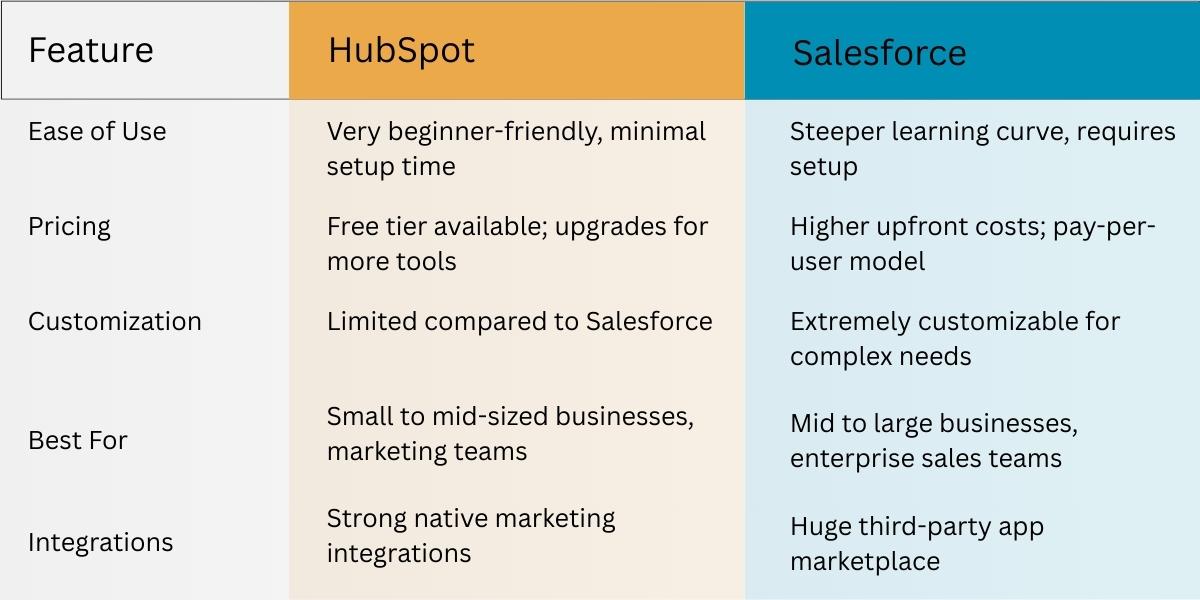
So, Which CRM Should You Use?
If you are a small to medium-sized business looking for an all-in-one platform with a strong emphasis on marketing tools, you might want to consider HubSpot. HubSpot is inexpensive, user-friendly, and provides an attractive way to generate and nurture leads.
If you’re running a larger business, have many moving parts to your sales processes, or require deep customization and strong automation, Salesforce might be the better option for you. There are truthfully more sophisticated, advanced features that make Salesforce the better choice for growing enterprises.
Need Help Implementing HubSpot or Salesforce?
Selecting a CRM is just the first part of the process — the implementation is where the real work is accomplished. Our practice at Empirical is to develop HubSpot and Salesforce systems and provide your organization support so you can ensure that whatever you invested in is utilized to its fullest potential. Whether your organization is implementing their CRM for the first time or looking to develop more complex workflows, we can customize a solution that will fit your organization.
Confused about choosing the right CRM for your business? Selecting a platform is only the first step—successful implementation is what drives results. Partner with experts who can customize, integrate, and optimize your CRM to match your workflows and growth goals.
Frequently Asked Questions
HubSpot is ideal for small to mid-sized businesses seeking an easy-to-use, all-in-one CRM, while Salesforce is better suited for larger organizations that require deep customization and advanced features.
Yes, HubSpot offers a user-friendly system with minimal setup time, making it a strong choice for teams new to CRM platforms.
Salesforce provides robust automation, analytics, and highly customizable workflows, which support complex sales processes and growing teams.
HubSpot includes a free CRM with basic functionality, allowing businesses to manage contacts and sales without an initial investment.
HubSpot is known for strong native marketing integrations and built-in automation tools that help nurture leads effectively.
Written by: Empirical Edge Team