




How long does it take to build a web app?
There are many variables in determining the time it takes to build a web application including: complexity of the application’s features, level of expertise possessed by the development team, and the development methodology employed to develop the application. With that in mind, web app development can take anywhere from weeks to months depending on the size and complexity of the project.
In this blog post, we’ll be looking at the entire web development timeline, the various steps involved in building a web app, and some of the factors that can affect the success of your project so that you can effectively plan your project and stay on time with it.
What is a Web-Based Application?
A web-based application is software that operates inside a web browser, allowing users to access data in real-time.
Some examples of web applications include:
- Software as a Service (SaaS) platforms
- Customer Relationship Management (CRM) Systems
- E-commerce Applications
- Online Reservation Systems
Unlike standard websites which provide static content, web-based applications provide a large degree of interactivity and dynamic content, creating greater challenges when developing these types of applications.
If you’re planning to build a scalable solution, our custom web application development services can help you create high-performance applications tailored to your business needs.
Stages of web application development
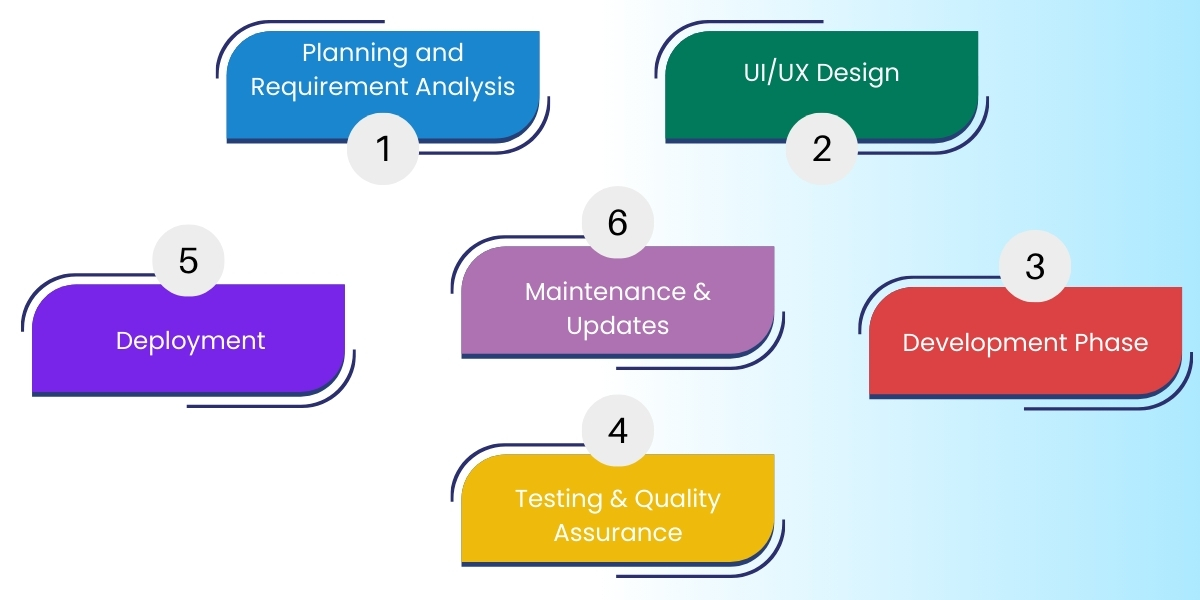
Knowing the stages of web application development will help you overall time estimate and the overall project expectations.
1. Planning and Requirement Analysis (1-3 Weeks)
This phase will be considered the foundation of the project.
Includes:
- Business Goals
- Target Audience
- Features List
- Technology Selection
Good Planning will help reduce delays and allow the project to keep moving in a smooth manner.
2. UI/UX Design (2-6 Weeks)
The Design phase will be focused on Users’ experience and the Interface.
Includes:
- Wireframes
- Prototypes
- Visual Design
A well-designed UI will create more user engagement and enhance usability.
3. Development Phase (1-6 Months)
This phase would be the primary stage of Custom web application development.
Includes:
- Frontend Development.
- Backend Development.
- Database Management.
The development phase will take the longest and can last from 4-16 weeks or longer, depending on how complex the application is.
4. Testing & Quality Assurance (2-6 Weeks)
Testing is performed to ensure that everything is working done correctly.
Includes
- Bug Fixing
- Performance Testing
- Security Checks
Typically, Testing will take between 10-30% of the total project time.
5. Deployment (1-2 Weeks)
You are now prepared to launch your application.
Includes:
- Server Setup
- Domain Configuration
- Final Checks
6. Maintenance & Updates (Ongoing)
Once the application is up, continual updating of the system will occur.
This will help with:
- Security
- Performance
- Scalability
Before choosing your approach, understand the difference between custom vs ready-made websites to make the right decision.
Things That Influence Development Time
1. Difficult Features
If you have lots of features added to the software, it will take longer for the developer to build it.
- Basic sign-in process → fast
- AI-based system → slow
Complex features often take longer to build like dashboards, APIs, automation.
2. Team Size and Skill Level
A skilled development team can help to:
- Reduce the amount of time it takes to complete a project
- Create cleaner, better-quality code
An experienced web development company will provide faster delivery of the product.
3. Custom versus Off the Shelf Development
- Custom-developed applications can be scaled, but development will take longer.
- Off-the-shelf solutions will be faster, but have limitations.
- Custom development will give you the best chance of achieving your long-term goals.
4. Use of Third-Party Integrations
When developing applications, you may want to incorporate:
- Payment gateways
- APIs
- Customer relationship management systems
All these add time and difficulty in the development project.
5. Changes to Requirements During Development
There are many changes that you may request as the development project proceeds:
- Increase cost
- Delay schedule
Effective planning will help to reduce your time to market.
6. Technology Stack
The use of modern technologies such as React, Node.js, and cloud-based technologies can contribute to an expedited development process.
7. Cross-Platform Compatibility
There are three main platforms for your application:
- Mobile devices
- Desktop computers
- Tablet devices
Cross-platform compatibility will take longer to build; however, it will improve user experience.
8. Security Considerations
Applications that require a high level of security (such as those associated with banking, finance, health care) require:
- Encryption
- The use of secure login
All the above items take more time to develop and test.
Real Example Timeline
Let’s say you’re building a SaaS application:
- Planning: 2 weeks
- Design: 4 weeks
- Development: 4–5 months
- Testing: 3 weeks
- Deployment: 1 week
Total: 5–6 months
Agile Approach to Software Development
The Agile approach is a modern method employed by web development teams.
Advantages of Agile:
- Faster iteration
- Continuous improvement
- Flexible change
Agile helps to significantly shorten the time it takes to complete projects.
Relationship of Cost and Time
- Faster development of product results in high-cost (many developers).
- Slower development of product results in low-cost (fewer developers), but the product can take longer to deliver.
A balanced approach to the development of web applications has proven to be very successful.
Tips for Speeding Up Development of Web Applications
- Identify Clear Requirements
- Use Experienced Developers
- Rely on Creating a Minimum Viable Product (MVP)
- Stay Away From Extra Features
- Use the Agile Methodology
Common Mistakes to Avoid in Developing Web Applications
- Lack of Planning
- Frequent Change in Requirements
- Lack of Testing
- Hiring Inexperienced Developers
Mistakes made in web application development, if frequent, can result in increasing the total time to develop by at least 100%.
Final Thoughts
Building a web application typically takes anywhere from 1 to 6 months, depending on the complexity, features, and development approach. Simple web apps can be completed in a few weeks, while complex applications like SaaS platforms may take 6–12 months. The total development time includes planning, design, development, testing, and deployment stages.
The critical factors are as follows:
- Quality of Development
- Scalability of Development
- Long Term Growth of Development
The decision on which team to work with and the proper strategy will create quicker and better results.

If you’re looking for a reliable web development company, our team offers custom web application development services to build scalable and high-performance solutions.
Frequently Asked Questions
It typically takes 1–3 months for simple apps, 3–6 months for medium-complexity applications, and 6–12+ months for complex web applications. The timeline depends on features, design requirements, integrations, and development approach. Projects with advanced functionalities like real-time data, dashboards, or AI may take longer to complete.
Yes, web applications can be developed faster by using Agile methodology, hiring experienced developers, and focusing on an MVP (Minimum Viable Product). Breaking the project into smaller phases, avoiding unnecessary features, and using modern frameworks can also speed up development without compromising quality.
Yes, custom web application development is worth it for businesses looking for scalability, flexibility, and unique functionality. Unlike ready-made solutions, custom apps are tailored to your specific needs, provide better performance, and support long-term growth. They also offer improved security and seamless integration with other systems.
The timeline depends on features, complexity, design requirements, team expertise, integrations, and technology stack. Clear planning can significantly reduce delays.
Web apps take time because they involve multiple stages like planning, design, development, testing, and deployment, along with complex features and integrations.
Written by: Empirical Edge Team