


Traditional software infrastructure often struggles to support this level of growth and flexibility. This is where Java cloud services play an important role.
In an increasingly digital-first global environment, businesses need applications that can:
- Handle higher workloads
- Store larger amounts of data
- Meet increasing user demand.
Traditional software infrastructures typically struggle to provide this level of adaptability and growth. This is why Java Cloud Services are even more relevant today.
Java Cloud Services bring together the traditional reliability of the Java programming language and the flexibility/scalability of cloud computing. Together, these two technologies will enable businesses to develop applications that run smoothly, can easily grow, and support new digital experiences.
Many different organizations across many different sectors are adopting Java Cloud Services because they provide improved system performance, increased reliability of applications, and a more efficient way to manage the growth of their businesses.
What is Java Cloud Service?
A Java Cloud Service can refer to the development process of Java-based applications hosted and managed in a cloud environment instead of traditional on-premises infrastructure. The applications would all be hosted on cloud platforms that offer different levels of computing resources.
Companies with Java-based applications can scale their systems dynamically in real-time, making it easy to use resources more efficiently and still consistently deliver performance to users, especially during peak usage times.
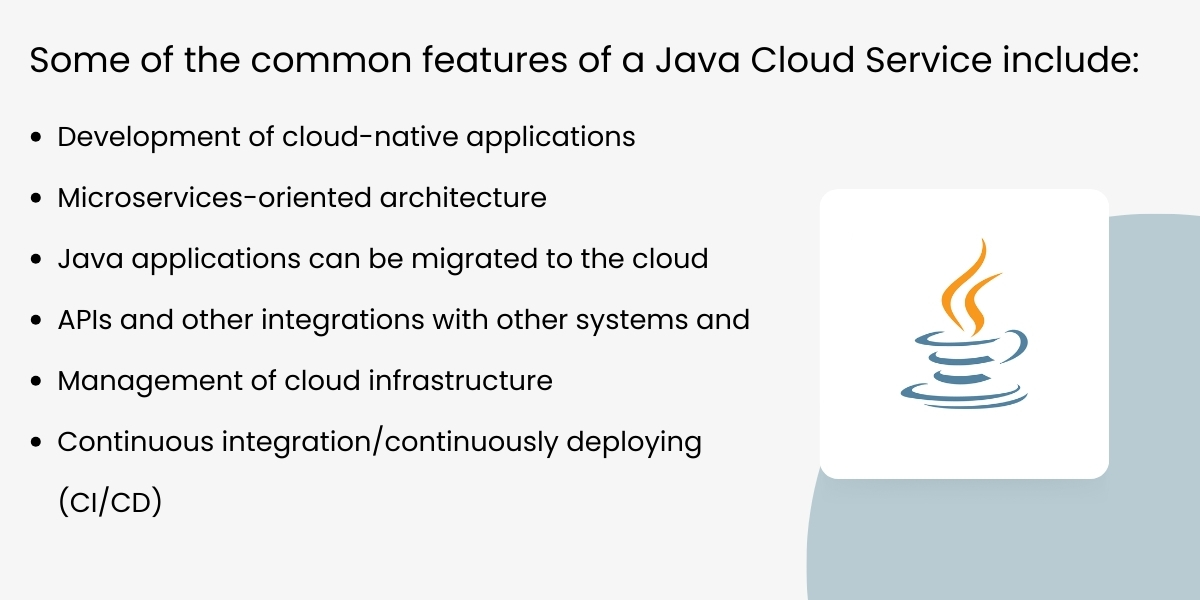
These features help companies modernize their existing technologies and become a leader in delivering high-performance digital platforms.
The Benefits of Using Java for Cloud-Based Applications
Many companies have had good experiences over the years building enterprise-level software systems using Java. The reliability, flexibility, and strong ecosystem associated with Java have made it easy to develop Java-based applications in the cloud.
Java allows for “platform independence,” meaning that an application can run on multiple platforms without the need to make significant changes. This is especially important when deploying applications across multiple cloud providers.
Java has a rich ecosystem of libraries, frameworks, and tools that allow developers to easily build cloud-based applications. With frameworks like Spring Boot, Jakarta EE, and MicroProfile, developers can create efficient, lightweight, and scalable cloud-based applications.
These capabilities make Java one of the most reliable technologies for building enterprise-grade cloud systems.
How Java Cloud Services Allow for Increased Scalability
One of the largest benefits of cloud computing is its capability for scaling. In addition, applications must be able to grow along with their customers and the requirements of running a business.
The following are some examples of how Java cloud services support increased scalability:
Dynamic Resource Allocation
Application developers can take advantage of the cloud to build applications that automatically adjust resource usage when users request more resources to meet that demand. When user demand increases, the system allocates additional resources to the application to maintain performance. When demand decreases, the system removes the extra resources that are no longer needed. Therefore, using dynamic resource allocation allows for the efficient operation of an application while also being more cost-effective to operate an application without wasting resources.
Microservices Architecture
Java cloud applications are being developed using microservices architecture instead of developing one large monolithic application and breaking it down into smaller components. Microservices architecture allows for a large number of independent services that have specific tasks as opposed to a single, monolithic application that has all the functions built into one, or a few, services.
Each of the microservices in a microservices architecture can have the ability to scale independently of each other depending on the amount of customer demand. Microservices architecture also allows for the ability to operate a service that has experienced high usage without having to scale the entire application.
Containerization and the Cloud
Many Java cloud services utilize containers and cloud deployment technologies such as Docker and Kubernetes. A container packages an application and any other necessary components together and allows for the application to be deployed more quickly and consistently.
Container orchestration tools like Kubernetes automatically manage scaling, load balancing, and system reliability. This ensures that Java cloud applications can handle high traffic volumes efficiently.
How Cloud Java Services Enhance Application Performance
Performance is an important consideration for today’s applications. When an application is slow or inconsistent, users have a poor experience, and the business misses potential sales.
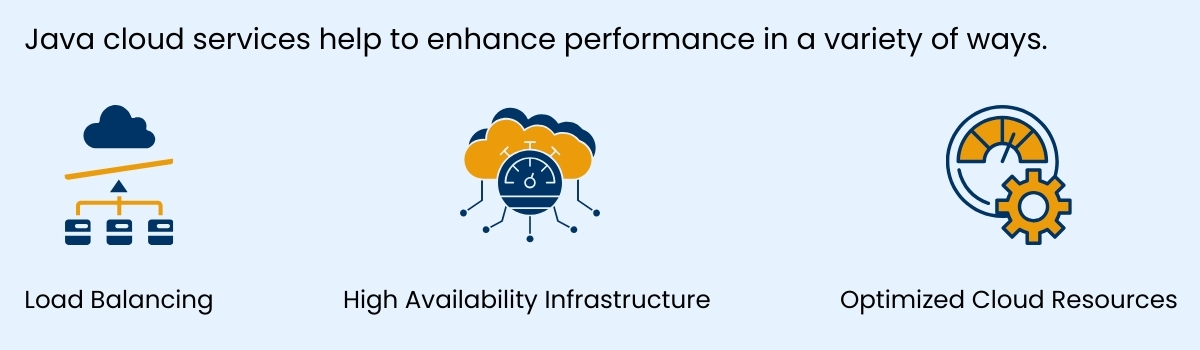
Load Balancing
A common use of cloud services is to distribute the incoming traffic onto multiple servers using a method known as load balancing. This helps to make sure that no single server will be too busy.
As a result, applications are stable and responsive to users even when they are experiencing high levels of usage.
High Availability Infrastructure
Cloud providers provide highly available infrastructure for customers to run their applications. This may be achieved by distributing applications across multiple servers that are located in different data centers.
In the event of any single server becoming unusable, there will be another available to take over without loss of service to the user. This improves the overall reliability of the system for the user.
Optimized Cloud Resources
Java Cloud Applications can be optimized for resource usage by using advanced monitoring tools that can help identify performance issues. Developers can monitor performance and make changes to their application’s configuration and code based on the data received.
By changing configurations of the cloud and by optimizing their application code, businesses can achieve a higher level of performance and response time.
The Business Value of Java Cloud Services
There are many tactical advantages that businesses will get from moving to Java Cloud Services.
Faster Development and Deployment
Cloud providers support modern development processes (such as Continuous Integration, Continuous Deployment) to help reduce time from the time of development to the time of release. As a result, businesses can deliver the new features and enhancements that they have developed, more quickly than they could with traditional methods.
Cost Saving
The benefit of Cloud Computing is that Businesses are no longer required to maintain large and costly on-premise infrastructures. Pay-as-you-go resources lower overall operating costs.
In addition, the automatic scaling of cloud computer resources ensures a more efficient use of all the resources used for the organization.
Secured Infrastructure Improvements
The Java based Cloud applications utilize multiple layers of security including encryption, authentication, and secure API integrations. Security provided by the Cloud Vendor is also provided through built in tools.
Seamless Integration to New Technologies
Java cloud-based applications integrate seamlessly with the Newest Technologies (i.e. AI, Big Data, and IoT) allowing businesses to build unique digital solutions for supporting their future growth.
Java’s Continued Development
The Cloud has a strong and growing market demand for cloud based applications and many organizations are directing their focus on their transformation to Cloud Computing as their new standard for technology. New technologies such as serverless computing, cloud-native microservices, and container orchestration require that development be done using Java.
As organization migrate to these New Cloud Architectures, Java will continue to provide the major platform for the development of new scalable and high available applications to support future growth.
Organizations today that invest in Java cloud-based services will have a platform for their ongoing new technologies/create solutions that build for their future Business Needs.
Conclusion
Cloud-based Java Cloud Solutions allow companies to create an integrated, secure, flexible, and highly available application architecture. The combination of cloud computing’s agility and the dependability of Java creates a modern digital platform that can grow and adapt to meet the fluctuating needs of the organization.
There are many benefits of using Java cloud technology for your business – such as increased scalability and more rapid deployment, as well as improved performance and reduced costs – making it an ideal option for companies who want to upgrade their technology platforms and construct a long-lasting digital platform for future success.
Build Scalable Cloud Applications with Empirical Edge
Empirical Edge helps businesses develop secure, scalable, and high-performance Java cloud applications that support digital growth and innovation.
Frequently Asked Questions
Java cloud services involve developing and deploying Java-based applications on cloud platforms to improve scalability, performance, and flexibility.
Java offers platform independence, strong frameworks, high performance, and reliable security features for cloud applications.
They use cloud infrastructure, microservices architecture, and automated resource scaling to handle increasing workloads.
Yes, cloud infrastructure provides load balancing and auto-scaling to maintain performance during high user demand.
Industries such as finance, healthcare, eCommerce, and enterprise software rely heavily on Java cloud development.
Written by: Empirical Edge Team