

Due to the increased use of the Internet and mobile technologies in today’s business operations, the majority of companies use some form of a database to store and manage their data. Regardless of whether your organization is consolidating systems, migrating to a cloud environment, upgrading existing systems, or continuing with the same legacy system, migrating data from one database environment to another is usually an expected part of your organization’s operations.
However, one of the largest concerns organizations have when migrating data is the amount of downtime their system will experience during the migration process, as well as losing data during that timeframe. As little as five minutes of lost time can mean the loss of revenue, decreased productivity, and the loss of customer trust for any organization.
This is where a professional Database Migration Service is crucial. These services utilize time-tested techniques, advanced technology, and expert planning to provide businesses with a seamless transition with minimal disruption to their operations and maximum integrity of their data. The primary focus of this article is to show how database migration services can help prevent data loss, minimize downtime, and deliver secure, reliable, and higher-quality results.
What Are the Risks of Database Migration?
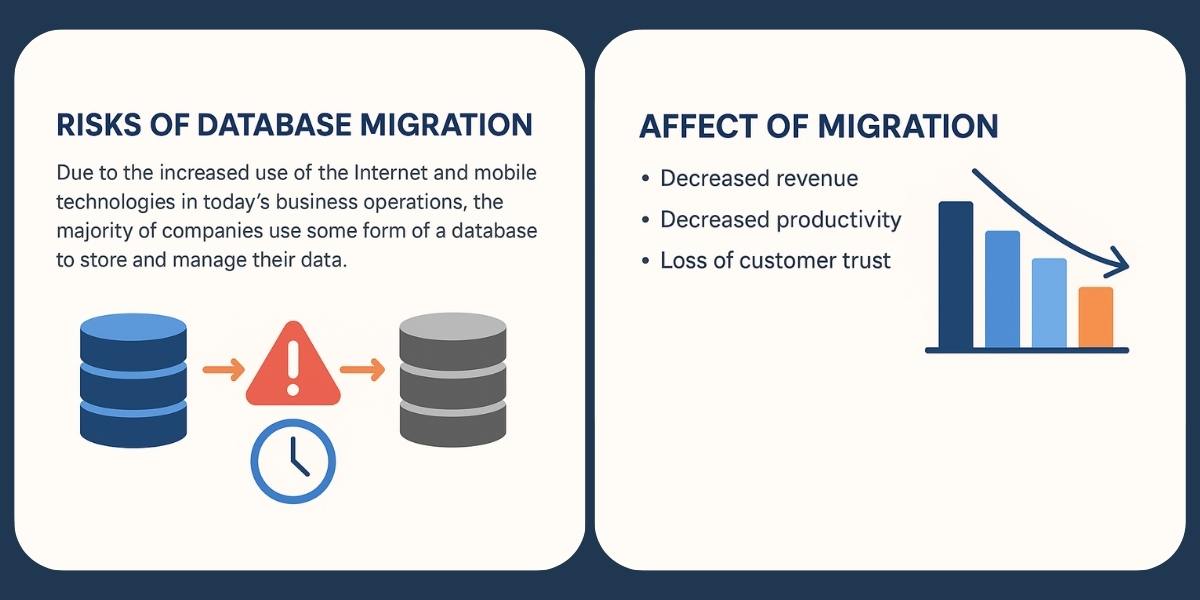
Migrating data from one database to another can involve transferring data from an on-site database to a cloud database or from one type of database engine to another. Unless you migrate your data using the appropriate methodology, you run the risk of experiencing:
- Extended system downtime
- Complete or partial loss of data
- Data being corrupt
- Performance of the system suffering
- Diminished Security
By experiencing unplanned system outages and inconsistent data between different database environments, organizations’ ability to continue in business can be greatly impacted. Professional database migration services are available to eliminate these potential issues for organizations by providing them with a structured methodology and automated processes for migrating their data.
Strategically Planning a Database Migration Before You Start
Pre-migration planning is one of the most vital components of how Database Migration Services can keep your downtime to a minimum.
Identifying & Reviewing Data
In reviewing the database structure, the amount of the database, its relationship to other databases, how it interacts with users through applications, etc., you should gather this information on each database.
Creating a Migration Success Path
When you create a clear path of when each phase of the migration will take place, what will happen if something goes wrong, and how each migration will take place, this will ensure that you will not disrupt any business function while you are migrating.
Mitigating Risk
By recording all possible points of failure, and creating contingency plans that identify all areas of concern, you have the ability to recover from any issues that arise quickly.
By taking the time to be proactive in your planning, you will greatly reduce the chances of having downtime during your migration.
Migration with Little or No Downtime
When you work with a modern Database Migration Service, you will have access to many advanced techniques that will allow them to maintain your systems up and running during your database migration.
Replicating Data “On The Fly”
By continuously replicating your source database to your target database, any changes to your source database will show up in your target database at the same time, allowing businesses to migrate while continuing to operate.
Utilizing Parallel Database Environments
By operating, always operating, two separate databases side-by-side until your migration is entirely finished, you can switch users over to your new database when you validate the data accuracy of the new database.
Incremental Migration
Instead of moving the entire database to your new location in one large transfer, transferring smaller batches of data will put less pressure on your systems and have a minimal impact on your ability to perform within your database system.
Accuracy of Migration Using Automated Migration Tools
There are many possibilities for data to be lost, incomplete, and/or inconsistent with manual migration; therefore, professional migration organizations typically utilize automated tools to achieve the most accurate migration possible.
Validation of Schema and Data
Automated migration tools are responsible for validating that the schema and data types, constraints, and relationships are consistent between the original source database and the destination.
Checking for Consistency
Consistency checks such as row counts, checksums, and data integrity rules automatically verify that all the data transferred to the new destination database was unaffected by the migration and remains consistent with the data stored in the original source database.
Rollback Ability
Rollback mechanisms used by automated migration services enable an organization to revert back to a previous point in the migration process if inconsistencies were discovered.
Automated migration systems provide repeatability, accuracy, speed (decrease downtime), and reliability.
A Strong Backup and Recovery Strategy
The foundation of any good Migration Service is a strong backup strategy to protect against the possibility of losing data.
Before and during the migration process, multiple backups will be made to provide an opportunity for recovery at any time.
Point-in-time Recovery Capability
Many Migration Service providers will have solutions allowing an organization to restore their database to a specific point in time to recover from accidental overwrites or corruption.
Disaster Recovery Planning
In the event of sudden and unexpected service interruptions, migration providers document an established recovery plan to allow them to return to production status as soon as possible.
The combination of all of these services will guarantee that data is consistently protected throughout the entirety of the Migration process.
Thorough Testing and Validation
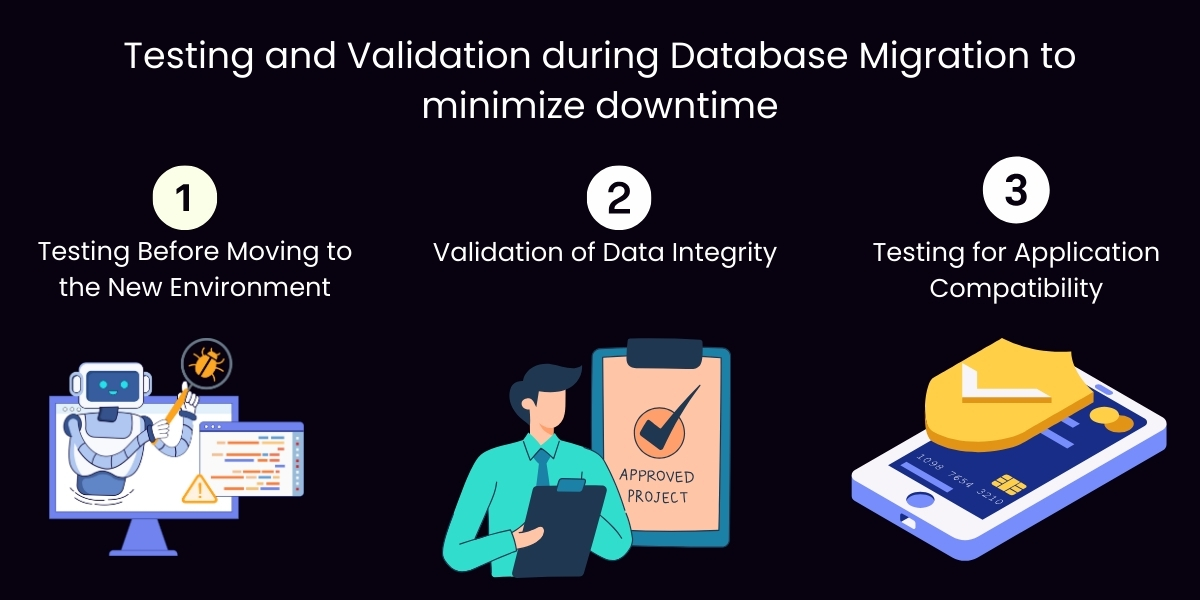
Testing is crucial in making sure that your company doesn’t experience any loss of productivity after to the cutover process.
Testing Before Moving to the New Environment
With Migration Services, performance, queries, and application behavior are tested in the target platform before going live.
Validation of Data Integrity
The entire database is validated (including tables, indexes, and relationships) to confirm that it is complete and accurate.
Testing for Application Compatibility
Applications connected to the database are tested for continued seamless compatibility after migration.
Only after successful validation can the Final Cutover to the new platform occur, minimally impacting operations after the previous environment is closed.
How to Migrate Securely
There are risks associated with Breaches during Migration, which could lead to loss of data and Compliance Violations. Professional Services focus primarily on Data Security throughout the entire process of Migration.
- Transmitting Data in an Encrypted Format
- Having Role Based Access Controls for transmitting sensitive data
- Ensuring Compliance with Required Standards i.e., GDPR; HIPAA; iSO
- Implementing Secure Authentication Methods
By implementing strict security protocols, Migration Services will protect all of your sensitive Business Information throughout both Transmit and Storage.
Conclusion
Done correctly, Database Migration can be secure and non-disruptive. That is why Businesses utilizing the right Database Migration Services have the ability to achieve minimal Downtime; No Data Loss; and an effortless Transition to the latest Platforms. By the help of the right migration services you can strategically plan, conduct Live Replications, conduct Automated Validations and monitor your Data after Migration ensuring Business Continuity and Data Security at every step along the way.
Investing in professional database migration services is not just a technical decision—it’s a strategic move that protects your data, your customers, and your business reputation.
Frequently Asked Questions
Yes. When handled by experienced professionals, migration services follow strict security, compliance, and validation processes to protect sensitive data and mission-critical applications.
Migration services include performance testing and optimization to ensure the new environment runs as fast or faster than the previous system.
Empirical Edge provides end-to-end migration services including assessment, secure data transfer, downtime minimization, performance optimization, and post-migration support.
Written by: Empirical Edge Team