


Developers have relied on Smarty as one of the most popular PHP template engines to keep their application logic separate from the presentation layer. Today, many content management systems and eCommerce platforms like PrestaShop or many custom built PHP applications use the Smarty Template Engine. Although Smarty provides a number of robust default features, most real-world implementations of Smarty need to go beyond the defaults provided by Smarty. Therefore, developers need to build custom Smarty plugins.
This article demonstrates how custom Smarty plugins extend functionality, increase performance, and allow businesses to create web applications that are more flexible and scalable than ever before.
What Are Smarty Plugins?
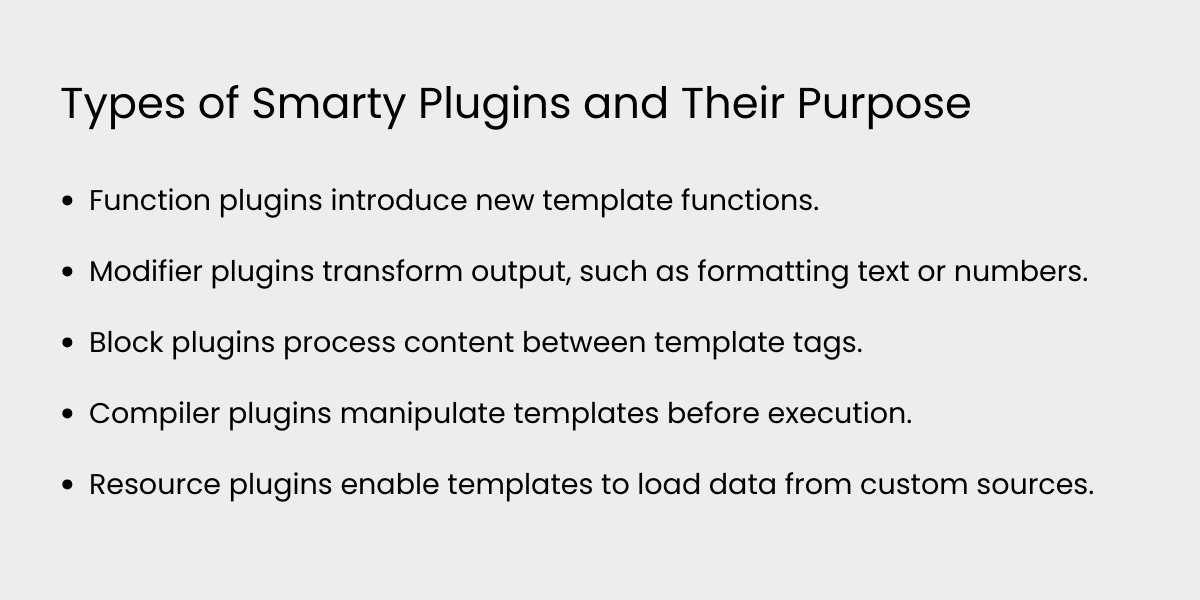
Smarty plugins are code that can be reused by developers across different templates. They let developers create new functions, create new modifiers, create new blocks, create new resources that can be used from within the templates. By creating plugins for complex implementations of code that would otherwise be part of an individual template, you can encapsulate that functionality in a reusable and organized manner. This also makes long-term maintenance easier for you and your developers by making the code base cleaner. By using this approach, you encourage modularization of your code, which in turn makes it easier to maintain.
Why Custom Smarty Plugins Matter
Every business application has unique requirements. Out-of-the-box Smarty features may not fully support complex workflows, advanced formatting, or third-party integrations. Custom plugins bridge this gap.
They help:
- Extend template functionality without altering core files
- Improve performance through reusable logic
- Enforce coding standards and best practices
- Enable scalable front-end development
For enterprises and growing platforms, custom Smarty plugins provide the flexibility needed to evolve without technical debt.
Utilizing Custom Plugins to Increase Functionality
Using a Custom Plugin, developers can extend functionality for those features that are not built-in to the Smarty framework. These features may include:
- Dynamic formatting of data
- Special User Interface components
- Multi-Language and Location Support
- Integrating with APIs and 3rd Party Services
- Performance Enhancements and advanced Caching
Developers write all repetitive logic in one location, therefore reducing the chance of error, as well as allows for the central management of such.
Improvement in Performance and Reusability
For high-traffic websites and eCommerce, it is essential that performance is the top priority. Custom plugins can greatly enhance the speed of your template rendering by encapsulating same logic or Resource intensive logic.
Reusable Plugins:
- Reducing Duplication of Logic
- Increasing Load Speed
- Simplifying the Debugging and Updating Process
- Supporting Scalable Template Systems
When properly implemented, custom performance-optimized plugins significantly increase page render times and enhance user experience.
Enhance Security and Validation of Data
Many templates receive dynamic Data, therefore they can be potential areas for Injection attacks as well as Formatting vulnerabilities. Custom Plugins provide the ability to Securely Validate and Format the Dynamic Data being displayed.
Plugins used in a Security Based manner, may:
- Filter User Generated Content
- Standardize Escaping of Output
- Enforce Rules on Formatting
- Reduce Risks At The Template Level
This type of validation provides a Secure Environment for Applications as well as produces Clean, Readable Templates.
Modular and Maintainable Development
Managing hundreds of templates is a challenging task as projects continue to grow and evolve. Custom plugins allow teams to create modular, standardized components that can be integrated across multiple templates and systems, thus facilitating modular development.
Some advantages of building with custom plugins include:
- Feature Updates Streamlined
- Consistent UI Behavior
- Developer Onboarding Made Easier
- Improved Development Cycle Time
Organizations will benefit from this structured and modular approach by using plug-ins.
Examples of How Custom Smarty Plugins Are Used
- Reusable Frontend Widgets (widgets)
- Analytics and Tracking Integrations
- Dynamic Navigation and Filter Creation
- Formatting Currency, Date and Product Attribute Values
- Managing Multi-Store and Multi-Language Experiences
In eCommerce applications, prices, stock, and personalized information are often processed and delivered through plug-ins.
Smart plugin best practices
To increase the likelihood that your custom Smarty plugins will provide long-term benefit, you should take a strategic approach to developing your custom Smarty plugins.
Best practices include:
- Keep plugins lightweight and targeted
- Use the same naming convention
- Clearly document how to use the plugin(s)
- Avoid putting direct database logic in your templates
- Regularly review and optimize performance
These best practices will allow for an easier path to scaling, security and maintenance of your plugins.
Benefits of a Custom Plugin Development for Your Business
There is great value in investing in custom plugin development for your business from an overall business viewpoint.
Organizations can expect:
- More Rapid Product Design
- Greater Flexibility in Design
- Reduced long-term Maintenance Costs
- Improved Performance and Security
- A More Future-Proof Architecture
Custom Plugins are therefore an integral aspect of any Quality Professional Development Services that use the Smarty Framework.
Conclusion
Custom plugins for Smarty represent a powerful means for organizations to extend the capability of their PHP application by simplifying the development of complex logic into plug-and-play Modular Components, thereby improving the performance and maintainability of their application, as well as allowing them to respond rapidly to changing business requirements.
Whether powering an eCommerce application, Content Management System, or enterprise application, a custom plugin for Smarty can maximize the full capabilities of the Smarty Framework.
Customize smarter, not harder. Empirical Edge provides creative Smarty plugin development to extend your application’s capabilities.
Frequently Asked Questions
Custom Smarty plugins extend the default capabilities of the Smarty template engine. They allow you to add business-specific features such as dynamic content blocks, custom data formatting, integrations, and automation—making your application more flexible, scalable, and user-friendly.
Yes. Well-built custom Smarty plugins optimize how data is processed and displayed, reduce template complexity, and support modular development. This leads to faster load times, cleaner codebases, and easier scaling as your application grows.
When developed following best practices, custom Smarty plugins are secure and reliable. They include input validation, secure data handling, and role-based controls to protect against vulnerabilities and ensure long-term system stability.
Empirical Edge designs custom Smarty plugins based on your business workflows, performance goals, and scalability needs. We focus on clean architecture, security, seamless integration, and long-term maintainability to deliver plugins that grow with your business.
Written by: Empirical Edge Team