




For today’s business and product teams, speed matters.
Markets move quickly. User expectations evolve fast. Investors expect traction. Customers expect seamless experiences across devices.
That’s why many business are choosing cross-platform app development.
But speed alone isn’t strategy.
The real advantage comes from building fast — with intention.
Why Business Choose Cross-Platform Today
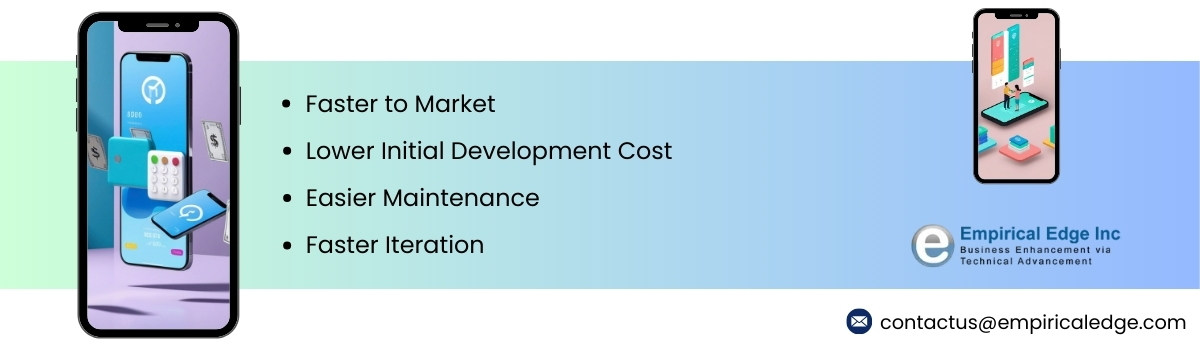
Today, start-ups use cross-platform because it allows them to have one codebase run on multiple platforms, usually Android and iOS.
This model has many advantages for early stage and growing companies.
1. Faster to Market – Launching on multiple platforms means you can acquire users fast and generate revenue faster.
2. Lower Initial Development Cost – A shared codebase means that the engineering hours to build one app versus two native apps are much less.
3. Easier Maintenance – Feature updates, bug fixes, and feature enhancement can be deployed in a more efficient manner between platforms.
4. Faster Iteration – Start-ups will be able to test new features, receive feedback and change their strategy faster.
Cross-platform will give product teams the agility they need to be able to validate product/market fit under a high level of pressure.
The main concern, though, is not how much faster cross-platform is, but rather whether it aligns with your long-term product strategy.
When Cross Platform Strategy is Beneficial
When cross-platform development is the right approach is if you are:
- Building a minimum viable product (MVP) to test demand.
- Creating a content-driven or forms-based application.
- Focusing on speed to market.
- Optimizing your budget.
- Accepting an equal number of features across platforms.
- Testing traction prior to investing heavily.
For many new businesses, launching quickly across both platforms provides visibility, increases demand for your product, and allows you to gather data to make better decisions.
In the above situations, cross-platform development is not only a technical decision but also a strategy for accelerating the growth of your business.
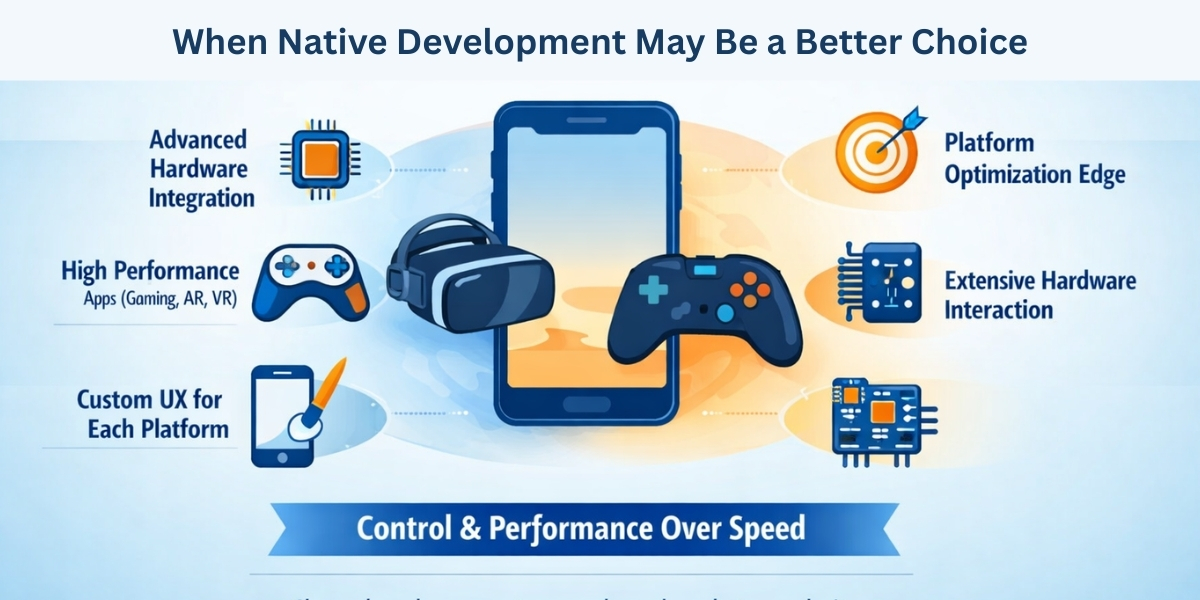
The Speed vs Control Dilemma As A Founder – All Product
Many product decisions are made based on two polar trade-offs:
Speed vs Control
Speed allows you to verify assumptions and develop your solution quickly while Control will help you create an optimal performing, completely customized, and scalable solution.
Great product teams do not make a direct choice between either speed or control. They consider:
- What development stage are we currently working in?
- What risks are we currently alleviating?
- What will yield the best return on investment at this moment?
- What outcome matters right now?
At Empirical Edge Inc., we work with business to evaluate those questions before we begin developing their product. A poor choice of architecture (technology) upfront can create a significant pivot on the back end that could cost you dearly.
When evaluating technologies, you should always tie those decisions back to your desired business outcomes, not just what every engineer on your staff would prefer.
What Are The Business Outcomes That Are Important
When developing cross-platform solutions with the purpose of achieving long-term business goals, startups frequently experience:
- Faster market entry
- Less capital burn
- Early traction across numerous user segments
- Greater trust from investors
- Scalable product architecture
Your objective is not just to launch an app but to build a sustainable growth engine.
When aligned with your long-term strategic development roadmaps, cross-platform solutions can provide accelerated development timeframes.
Building with Intention
Intentional development means:
- Clear problem definition
- Defined success metrics
- Validated user personas
- Realistic budget planning
- Scalable architecture decisions
Cross-platform works best when it is part of a strategic plan — not just a cost-saving shortcut.
For many U.S. startups, the smartest path is launching cross-platform first, then optimizing or transitioning as the product matures.
The key is alignment between technology, growth goals, and business strategy.
AI-Based Development in Cross-Platform Apps
Artificial Intelligence (AI) is changing the way cross-platform applications are created, making developers more productive than ever before. By using intelligent automation to write code, optimizing the performance of the app through machine learning-based methods, and offering functionality features automatically generated based on user input, developers will find themselves working significantly faster and smarter than ever before.
Developers can now use AI to create intelligent functionality such as chatbots, personalized recommendations, and predictive analytics without having to write all of the code themselves manually. These intelligent features will improve the user experience and lead to increased engagement with users.
Using AI-generated code will also reduce time and cost for developers by providing a single reusable code set that functionally works across all three popular operating systems – iOS, Android, and web. With AI-based applications, businesses can get their applications into production more quickly and efficiently while also ensuring the applications continue to have high levels of performance and scalability.
So ask yourself:
At this stage, does your business benefit more from speed — or from complete control?
Launching a new app?
Connect with Empirical Edge Inc. to build cross-platform solutions that balance speed, scalability, and long-term growth.
Frequently Asked Questions
It’s a development approach where a single codebase is used to build applications for multiple platforms, such as iOS and Android.
Typically, yes. It reduces duplication of engineering work and shortens development cycles.
Yes, when built with proper architecture and scalability planning.
When advanced performance, platform-specific features, or hardware-level integration is required.
We evaluate your goals, budget, scalability requirements, and growth strategy to recommend the right technical approach.
Written by: Empirical Edge Team