



Enterprises require Web applications that can be trusted, expanded upon, are secure, and can be supported for the longest time possible. A large number of organizations have adopted many of the current PHP frameworks, but Core PHP has proven itself to be a powerful choice for enterprise-level Web solutions in situations that require complete control, custom architecture, and the best performance possible.
Core PHP helps enterprises to create custom applications without the extra bloat of the component pieces of a framework. Core PHP is the best foundation for enterprises that have complex workflow processes, have legacy integrations, or need very specific performance standards.
In this blog, I will be discussing how Core PHP is still relevant in enterprise Web development today, what the advantages of using Core PHP are, the use cases of Core PHP, and what the best practices are when creating an enterprise-level solution using Core PHP.
What Is Core PHP?
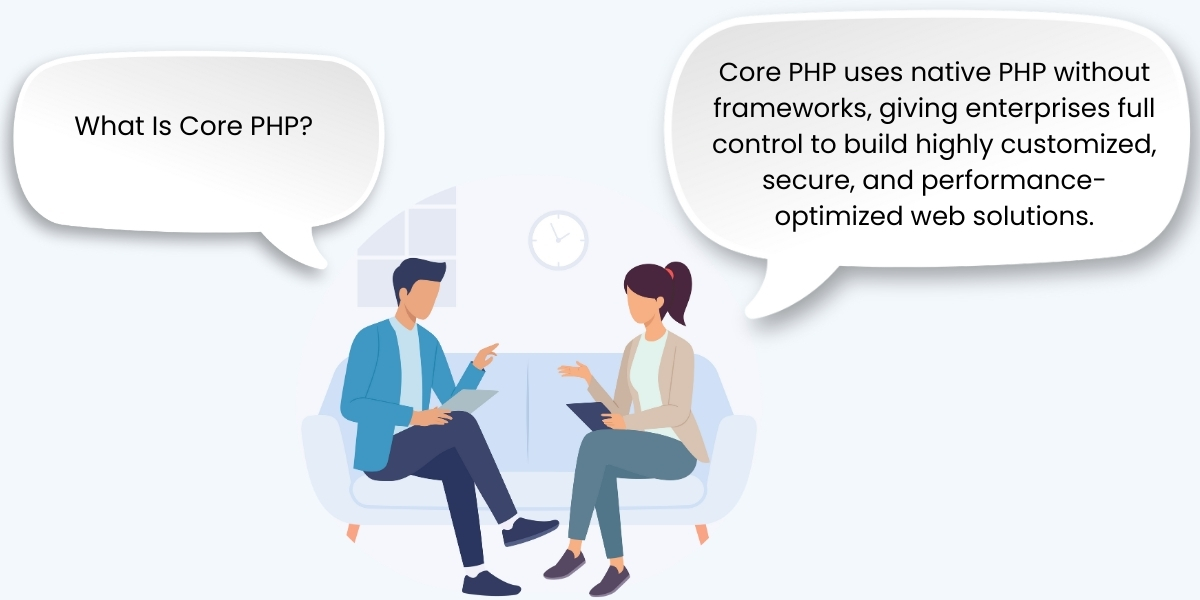
Core PHP refers to developing applications using native PHP without relying on frameworks such as Laravel or CodeIgniter. It gives developers direct access to PHP’s core features, enabling them to design fully customized architectures aligned with specific business needs.
For enterprise projects, this approach allows teams to eliminate abstraction layers, optimize system performance, and maintain precise control over security and scalability.
Enterprise Use of Core PHP
Maximization of Customization, Control & Flexibility
Enterprises typically have many layers of complexity to deal with because enterprise systems usually have complex business rules, have integrated third parties, and require the development of custom workflows. Using Core PHP, developers can create custom application logic that meets their needs without the limitations of a framework.
Greater Speed, Performance & Efficiency
There are many features included in most frameworks that may not be needed in a large-scale organization. Using Core PHP improves performance, speeds up execution time, decreases RAM usage, and ultimately provides a much more efficient solution for an organization’s high traffic.
Ability to Scale as Your Business Grows
If an appropriate architecture is put in place, applications built on Core PHP can easily be scaled to support additional demand. Organizations are able to create custom cache systems, load balancing systems, and database optimizations that will allow them to support the expected growth of users and data.
Robust Security Implementations
Enterprise applications require a level of Security protection that few other types of applications require. Because Core PHP allows you to create your own security mechanisms and enforce security requirements, organizations have complete control over their security requirements as they relate to compliance with regulatory requirements and standards.
Easily Interfaces and Integrates with Legacy Systems
Many large corporations utilize software and databases that are decades old (some probably even dated back to the 70s). Therefore, developing using Core PHP allows a corporation to easily integrate with older systems, utilize API’s to extend their capabilities, take advantage of ERP systems, use proprietary tools and not experience compatibility issues.
PHP Core use Cases in the Enterprise World
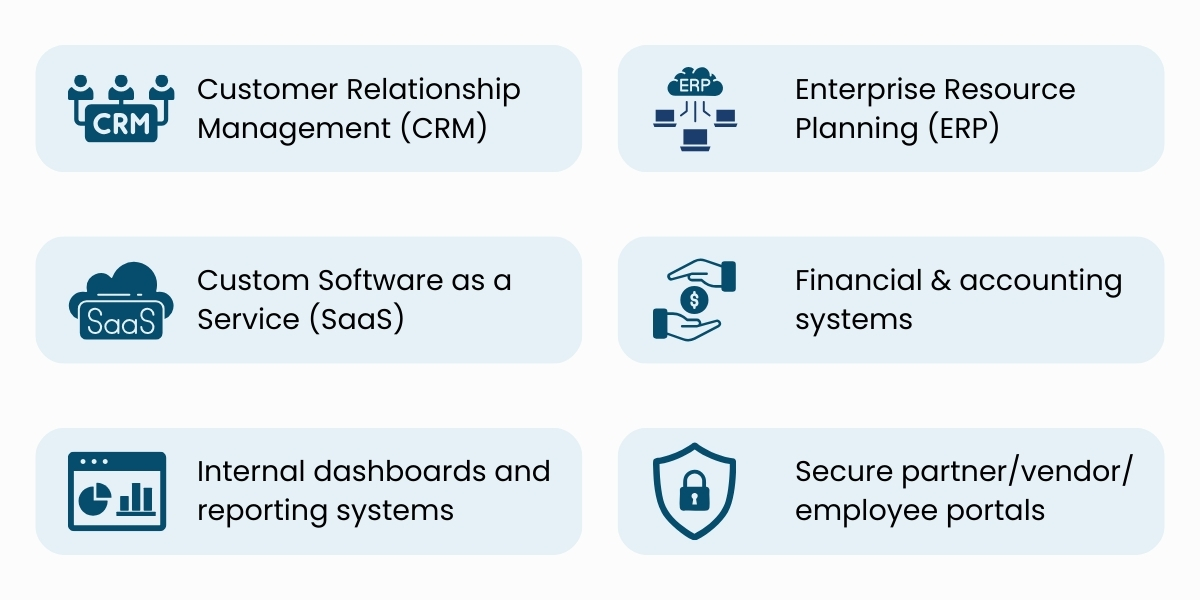
Core PHP has many enterprise uses across a wide array of industries. The most common enterprise use cases for core PHP application development include:
- Customer Relationship Management (CRM)
- Enterprise Resource Planning (ERP)
- Custom Software as a Service (SaaS)
- Financial & accounting systems
- Internal dashboards and reporting systems
- Secure partner/vendor/employee portals
Because of its flexibility, core PHP can be utilized to create enterprise applications that are used internally, as well as consumer-facing applications.
The Security Advantage of Using Core PHP as an Enterprise Application Development Solution
Enterprise applications often involve sensitive information (including customer records, financial documents, and proprietary business processes) therefore, you would want your Enterprise Application to have strong security capabilities. The following key security features are supported by the Core PHP framework:
- Custom Authentication and Authorization
- Secure Session Management
- Data Validation and Sanitization
- Protection from SQL Injection, XSS, and CSRF attacks
- Role-based Access Control
If proper security measures are implemented, then Core PHP Applications can provide adequate security for enterprise compliance requirements and data protection laws.
Performance Optimization in Core PHP Applications for the Enterprise
As an enterprise developer, it is crucial that your enterprise applications perform optimally. Core PHP offers many ways in which developers can optimize the performance of the application.
To increase Performance, Developers should end up with Faster Response Times and a Better Overall End User Experience; When Operating Under Load
To achieve these goals and increase Performance, Developers should manage:
- The Number of Dependencies; Eliminate the Unnecessary Dependencies
- Developers should create Efficient Queries and Establish Efficient Use of Database Indexes
- Creating Server-Side Caching Mechanisms
- Efficiently Managing Memory Usage
- Managing Application Flow with Strict Control
- Maintainability and Longevity
Maintainability and Long-Term Stability
Enterprise-grade Core PHP applications are the easiest to maintain and modify. This gives large enterprises the following advantages.
- A clean, the modular structure of code
- Logic separating and coupling
- Low dependency risk
- Long-term commitment, as the developer doesn’t have to upgrade frequently.
Core PHP is a long-term commitment for an enterprise to build applications that will be running for a long time.
When should an enterprise use Core PHP?
Enterprises should use Core PHP when they need:
- Complex business logic that must be custom-built
- Optimized for speed
- Operate a legacy system that is being integrated with a new Core PHP application
- Full control over the architecture
- Long-term commitment to stability
A Core PHP enterprise system gives an enterprise the maximum flexibility and control.
Best Practices for Building Enterprise Applications Using Core PHP
Enterprises should implement best practices to be successful with core PHP:
- Have a modular structure like an MVC system
- Enforce a coding standard and create documentation
- Implement high-quality security practices
- Use a version control and a CI/CD system
- Perform regular performance audits and testing
By following these best practices, an enterprise can maintain the scalability, security, and maintainability of their core PHP application over time.
Conclusion
Core PHP continues to be a strong and reliable choice for enterprise web solutions. Its flexibility, performance efficiency, and customization capabilities make it ideal for organizations with complex requirements and long-term digital strategies.
When developed with proper architecture and best practices, Core PHP enables enterprises to build secure, scalable, and high-performing web applications tailored precisely to their business needs.
Partnering with an experienced PHP development company ensures that enterprises maximize the benefits of Core PHP while maintaining security, performance, and scalability for the future.
From complex logic to seamless integrations, Empirical Edge’s Core PHP development services handle it all. Build faster, grow smarter, and stay ahead of the competition — let’s talk about your project!
Frequently Asked Questions
Core PHP is chosen when enterprises need full control over system architecture, lightweight performance, deep customization, and integration with existing enterprise systems. It avoids unnecessary overhead and is perfect for building custom solutions, legacy modernization, and performance-critical platforms.
Yes. Core PHP integrates easily with cloud platforms like AWS, Azure, and Google Cloud. It supports containerization, microservices, API-first development, CI/CD pipelines, and scalable cloud infrastructure.
Core PHP reduces licensing costs, avoids framework dependency, and allows performance-optimized development. Enterprises benefit from lower infrastructure overhead, long-term flexibility, and full ownership of their software solutions.
Yes. Empirical Edge delivers enterprise-grade Core PHP solutions including system architecture, performance optimization, cloud deployment, API development, and legacy system modernization tailored to business goals.
Written by: Empirical Edge Team