




Through digital transformation, logistics has undergone a profound shift. Digital tools may introduce a new level of connection, speed, and intelligence into the supply chain process. Logistics has evolved beyond simply moving product now to include all aspects of moving data, insights on the go, and utilizing digital technologies intelligently.
The explosive growth of eCommerce in the United States, along with the growing expectation from consumers for same-day service and the increasing complexity in supply chains around the world, has put the pressure on Logistics providers to modernize their operations.
In order for Logistics providers to effectively operate in this new environment, they must make large investments in advanced digital technologies designed to optimize operations and reduce costs while improving their customers’ experience.
The aim of this article is to provide insight into how the logistics industry is changing due to Digital Technology, the primary factors driving this change, and what Logistics providers in the United States can do to develop a strong digital transformation roadmap for their business.

Logistics In The Digital Age
Logistics in the 21st Century is an evolution of traditional, disconnected logistic processes and systems to the fully digital ecosystem.
In the past, logistics were defined by the physical transportation, warehousing, and inventory management of products through manual processes using isolated tools. In today’s world of logistics, we have transitioned away from these outdated methods to a digital platform relying on real-time data collection and analytics from the use of cloud technology, artificial intelligence (AI), and fully integrated systems.
The Future of Logistics will be driven by:
- The use of cloud technology for transportation, warehousing, and inventory management
- The availability of real-time data and integrated operating systems
- Forecasting and Analytic tools driven by AI
- Web & Mobile Applications for customers and operational users
- Single source databases with data visualization and dashboards
The Change to Digital Logistics Networks will allow American Companies to rapidly adapt to changes in Business Demand, Workforce Issues, and Growing Customer Expectations.
What Will Change in Logistics?
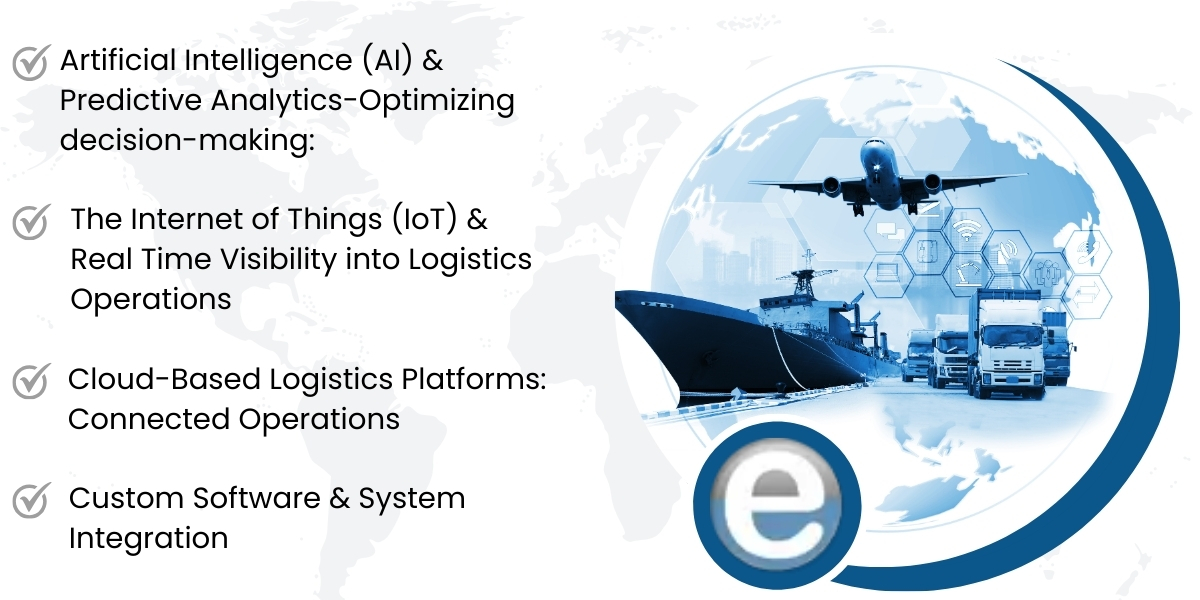
1. Artificial Intelligence (AI) & Predictive Analytics-Optimizing decision-making:
AI and predictive analytics can significantly enhance decision-making throughout logistics and supply chain operations.
Logistics firms will benefit from an AI-based system to:
- Accurately forecast demand
- Predict delays in delivery of goods
- Effectively plan for transportation
- Enhance performance of warehouses
- Develop the capacity planning function using analytics-driven data.
AI systems will be able to employ machine learning algorithms to identify patterns in historic data, current conditions, and future trends to provide business intelligence for strategic operations.
As a result, businesses will see lower operating costs, enhanced planning capabilities, reduced disruptions in service, and greater on-time delivery performance.
Empirical Edge will aid businesses in this transformation by providing AI-powered software, data dashboards and tailored software solutions.
2. The Internet of Things (IoT) & Real Time Visibility into Logistics Operations:
IoT-enabled logistics solutions allow companies to gain real-time visibility into their logistics operation. With devices and tracking software connected through the Internet, logistics companies can:
- Identify location of shipments
- Understand environmental conditions affecting shipments
- Assess performance characteristics of vehicles used for transport
- Know the location of assets
- Provide customers with live tracking capabilities via online dashboards.
Real-time tracking solutions increase the level of transparency within logistics operations and improve accountability across the supply chain. Furthermore, many industries are required by law to maintain records of their shipments (such as healthcare, food, retail and manufacturing) and provide their customers with the ability to monitor the progress of their shipments.
As a result, companies will experience improved visibility, improve customer relations and improve the ability to resolve problems quickly and accurately, thereby decreasing the impact of loss of cargo.
3. Cloud-Based Logistics Platforms: Connected Operations
The foundation of Cloud Platforms within the Logistics Industry is Cloud Computing; Cloud Platforms have integrated all types of Logistics Software Systems into a single location & a single source of Security & Support for all Logistics Activities. In addition, Cloud-Based Logistics Solutions allow for:
- Interactions with either single or multiple geographic locations, as well as between multiple Suppliers, Customers & Carriers.
- The Ability to access all Logistics Software via the Internet.
- The Ability to Scale Operations Based on Business Needs.
- The Ability to Create & Deploy Digital Services Based On Client Needs Faster Than Ever Before.
With the vast geographic size of the United States Logistics Industry, Cloud Computing Platforms have provided Logistics Companies with the Flexibility & Resiliency necessary for continued Growth & Innovation.
4. Custom Software & System Integration
Custom Software & System Integration is a trend that has also started to dominate the Market for Logistics Organizations. Companies are starting to look for customized Systems to create Digital Functions and Systems that represent their unique Workflow Processes.
The Custom Software / Systems of Logistics Support the Following Functions:
- Management of Fleet Vehicles and Transportation Operations.
- Management of Warehouse & Inventory Operations
- Management of Customer Orders & Customer Information
- Internal Dashboard Applications
- Integration with Third-party Systems (API/ERP)
The Value of Digital Logistics Transformation
Logistics companies investing in digital technologies gain measurable business benefits.
Operational Efficiency
Cloud platforms, AI tools, and system integration remove bottlenecks and streamline workflows.
Cost Optimization
Predictive insights and centralized systems reduce waste, downtime, and overhead.
Data-Driven Strategy
Advanced analytics supports forecasting, planning, and performance measurement.
Customer Experience
Real-time visibility, digital portals, and faster service enhance trust and loyalty.
Scalability
Cloud-based platforms allow logistics companies to grow without infrastructure limitations.
How Digital Transformation has affected the U.S. Logistics Market
The impact of digital transformation on the U.S. logistics market includes:
- Reducing the operational costs of logistics companies
- Increased Speed & Reliability of Delivery Processes
- Greater visibility throughout the supply chain
- Meeting customer expectations for Same Day and Next Day Deliveries
- Enhancing Customer Engagement
- Enhanced Agility and Scalability to From eCommerce To Logistics
The digital transformation has turned logistics into a technology driven business where companies will use digital capabilities to gain competitive advantage over their competitors.
How to Prepare for Digital Transformation
Digital transformation is a process that must be approached in phases, and through a strategic plan.
Logistics organizations can approach their digital transformation by:
- Evaluating the Current Systems and Workflow Shortcomings
- Creating a Digital Priorities and Business Goals
- Integrating Legacy Systems into Newer Platforms
- Developing Custom Logistics Software
- Building Digital Infrastructure to be Cloud-ready
- Building Data Platforms for AI-Driven Decision Support
- Training the Logistics Staff on Digital Logistics Operations.
Several U.S. Logistics companies are now investing in their own unique platforms that meet their operational needs, compliance requirements and long-term growth strategies.
Empirical Edge helps facilitate this process through Consulting, UI/UX Design, Software Development, Cloud Services and AI Solutions, along with ongoing maintenance of the platforms.
Conclusion
Digital transformation in logistics is no longer optional — it is essential for competitiveness.
By leveraging AI-driven insights, real-time data platforms, cloud-based systems, and custom logistics software, companies can build more intelligent, agile, and customer-focused supply chains.
U.S. logistics companies that invest in digital transformation today will create a strong foundation for operational excellence, innovation, and sustainable growth.
Ready to modernize your logistics operations?
Partner with Empirical Edge to build custom, scalable digital solutions that enhance visibility, optimize workflows, and drive smarter supply chain performance.
Frequently Asked Questions
Digital transformation in logistics is the use of modern digital technologies such as cloud platforms, AI-driven analytics, real-time tracking systems, and custom software to improve supply chain visibility, efficiency, and decision-making.
It helps logistics companies reduce operational costs, improve delivery performance, gain real-time insights, scale operations, and meet growing customer expectations in an increasingly digital marketplace.
Key drivers include AI and predictive analytics, IoT-enabled tracking systems, cloud-based logistics platforms, system integration, custom logistics software, and web and mobile applications.
Custom logistics software is built around your specific workflows, regulations, and business goals. It improves system compatibility, operational efficiency, scalability, and long-term digital growth.
Empirical Edge provides custom software development, logistics web and mobile applications, cloud solutions, AI-powered platforms, system integration, database management, and long-term digital support.
Written by: Empirical Edge Team