

Businesses have to maintain their ability to adapt quickly to changing conditions but do so without having to invest large amounts of money up front or pay ongoing maintenance costs associated with maintaining their existing physical infrastructure. Due to this need for businesses in virtually every industry to continue innovating and responding to customer demands, more and more organizations are turning to using cloud computing services rather than maintaining on-premises physical infrastructure.
With the adoption of cloud services, organizations can benefit from decreased costs associated with IT investments and can grow their organizations seamlessly as their business needs continue to evolve. In this article, we will review the benefits of using cloud computing services to help organizations save money and become more efficient in their operations.
A Cloud Computing Overview
Cloud services offer businesses access to various types of computing resources (servers, storage, database, etc.) via the Internet instead of requiring them to maintain their own physical computing environment. Businesses typically subscribe to cloud services using a subscription model, meaning that they pay for only what they use when they require it.
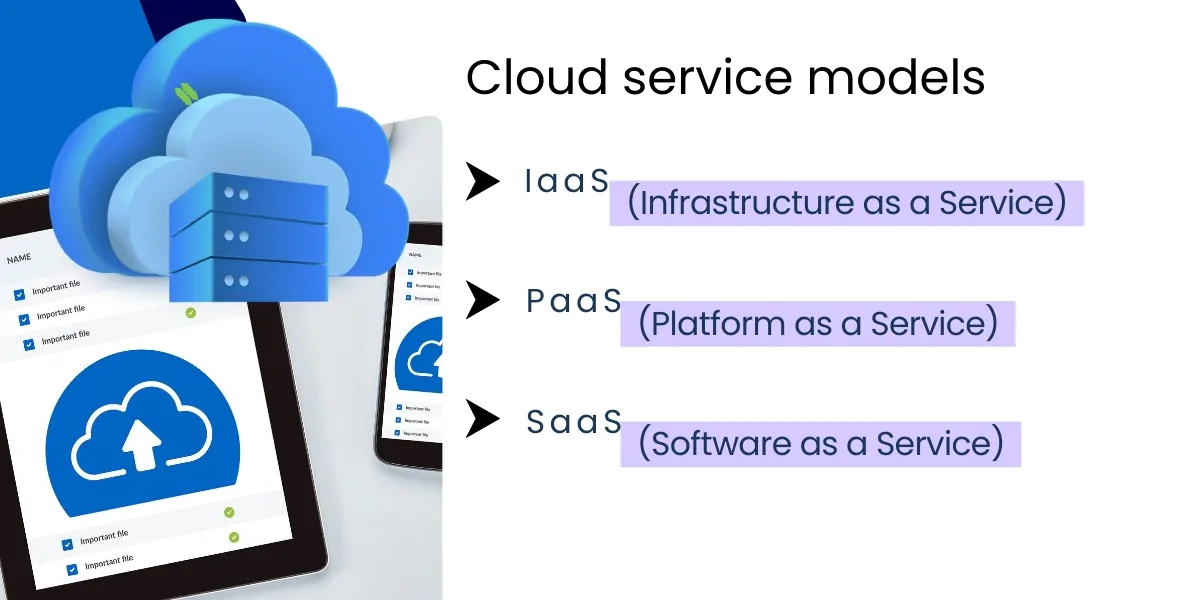
When using cloud services, there are several common service models:
1. IaaS (Infrastructure as a Service)
2. PaaS (Platform as a Service)
3. SaaS (Software as a Service)
By using these service models, businesses reduce their need to manage many layers of computer infrastructure while concurrently saving considerable amounts of money associated with IT infrastructure maintenance.
How Cloud Services Reduce IT Costs
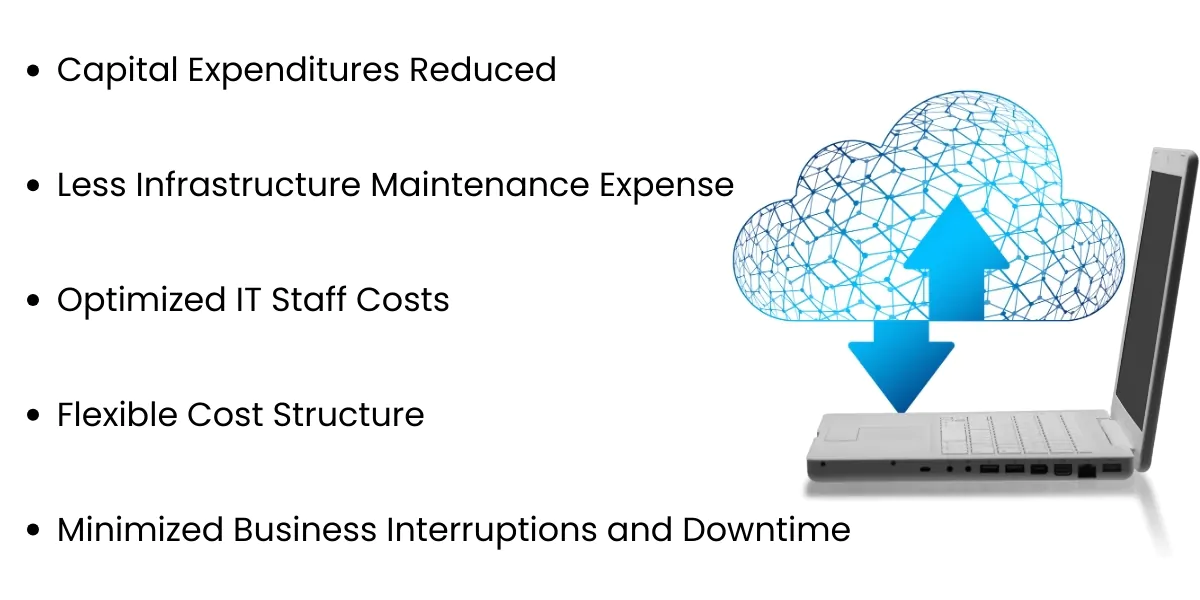
1. Capital Expenditures Reduced
With a traditional IT model, businesses must invest heavily up front, purchasing hardware, servers, networking equipment, and a data center, in addition to making recurring monthly payments. With the cloud, those up-front costs are eliminated; customers pay a subscription fee (or usage-based) for the services they access in the cloud. The cloud allows businesses to only pay for what they consume, reducing financial risk.
2. Less Infrastructure Maintenance Expense
When a business uses its own on-premises infrastructure, they have ongoing maintenance expenses associated with hardware upgrades, repairs, cooling systems, power consumption, and physical security. However, using a cloud service means that the provider is responsible, so many of those ongoing operational maintenance costs are avoided or eliminated.
3. Optimized IT Staff Costs
Using the cloud eliminates the need for businesses to hire and maintain a larger internal IT team to manage servers and perform maintenance. With the automation of updates, monitoring, and backups offered by cloud platforms, businesses’ manual workload is reduced, thereby allowing for optimal staffing costs.
4. Flexible Cost Structure
A price structure that is based on the cloud’s “pay-as-you-go” functionality allows businesses the flexibility to increase or decrease their services based on the current level of demand. Businesses will never pay more than they need to for unutilized capacity. This is especially advantageous for startups and smaller businesses that experience significant fluctuations in workload.
5. Minimized Business Interruptions and Downtime
When businesses suffer downtime, it often translates to significant financial loss while also having an impact on customer trust. Cloud services are designed to provide built-in redundancy, backup, and disaster-recovery solutions, thus minimizing the potential financial impact from any unexpected downtime or system failure.
Scaling Up with Cloud Services
On-demand resource scaling.
Cloud services have one of the biggest advantages of giving businesses the ability to scale up or down whenever they want, as there are no geographical limitations to accessing computing resources. It means that if a business needs more computational power due to the influx of business from new product launches or seasonal increases in sales activity, it will get the computing resources it requires.
Faster Time-to-Market and Deployment.
Businesses can deploy new applications and services much faster using cloud environments than they can with traditional methods by removing the long process of acquiring hardware and setting it up. As a result businesses can react and take advantage of market opportunities/gather data to meet customer demands.
Support for Growing Business Needs.
When a business grows in size, so does its IT requirements. With cloud services, when this happens, an organization can easily scale up its IT, by adding storage, processing power and users without worrying about limited infrastructure.
Easy Access to Data on a Global Basis.
Cloud services allow companies access to their information over several different regions of the world without having to build additional infrastructure within those regions. Therefore, teams throughout the world can securely access information regardless of where they are located. Thus allowing companies to employ remote workers, and thus to expand internationally.
Easy Integration with New Technologies.
Cloud platforms allow businesses to easily connect with/implement/buy/use the latest technologies including AI, big data analytics, IoT, and DevOps tools. Thus, allowing companies to scale their capabilities to not just include infrastructure, but also take advantage of the latest technology to implement and increase their products/services by providing innovative capabilities.
Cost Efficiency and Scalability Across Various Business Sizes
For small and mid-sized businesses (SMBs)
The introduction of cloud-based services has provided SMBs with the same types of infrastructure as large enterprise companies, without the corresponding costs. This has allowed SMBs to grow their businesses efficiently while adhering to strict budget controls.
For enterprises
When operating at scale, cloud scalability provides an excellent opportunity for large organizations during their high traffic times, mergers, and during their digital transformation processes. In addition, Cloud-based environments are an excellent fit for complex workloads, while also allowing for savings in the long run on IT expenditures.
The Value of Cloud Computing as a Strategic Tool
Beyond cost-effectiveness and the ability to expand, cloud computing has strategic value to businesses. By moving towards a cloud infrastructure, companies can innovate more quickly, improve operational efficiencies, secure data better, and take advantage of business continuity. Companies can reallocate their IT investments away from maintenance and towards growth-oriented initiatives when utilizing cloud-based solutions to help them adapt to rapidly changing marketplace conditions.
How to Select an Appropriate Cloud Services Provider
To maximize their cost savings and scalability, companies should seek out experienced cloud services vendors that provide:
- A Customized Cloud Strategy
- Transparent Pricing Models
- Secure and Compliant Solutions
- Ongoing Support and Monitoring
- Scalability Plans that Align with Business Goals
An experienced Cloud Services Vendor will provide a seamless transition for a company to their new cloud environment and help them operate efficiently moving forward.
Final Thoughts
Cloud services have transformed how businesses manage IT infrastructure. By eliminating high capital expenses, reducing maintenance costs, and offering unmatched scalability, cloud computing empowers organizations to operate more efficiently and grow confidently.
Investing in cloud services is not just about reducing IT costs—it’s about building a flexible, future-ready foundation that supports innovation, resilience, and sustained business growth.
Transform your IT landscape with cloud efficiency. Empirical Edge is here to help your business scale smarter
Frequently Asked Questions
Cloud services eliminate large upfront hardware investments and replace them with pay-as-you-go pricing. Businesses save on infrastructure, maintenance, upgrades, energy, and in-house support while only paying for the resources they actually use.
Yes. Leading cloud providers offer enterprise-grade security, including encryption, identity management, compliance controls, and continuous monitoring. When implemented correctly, cloud environments often provide stronger security than traditional on-premise systems.
Empirical Edge designs tailored cloud solutions focused on cost efficiency, performance, and future scalability. We help businesses migrate, optimize, secure, and manage cloud environments that align with long-term business goals.
Written by: Empirical Edge