




The rate of the eCommerce Industry’s development is rapidly increasing. Customer demands are increasing as well as traffic spikes during the peak seasons, and competitors are always entering the market. Therefore, eCommerce Companies must implement technology and infrastructure that is flexible and scalable to suit their customer demand now, during peak times, and into the future.
Cloud Computing provides eCommerce businesses with the Agility, Performance, and Security to create a seamless online shopping experience while allowing the Business to grow and expand.
This article will explore how Cloud Computing is changing the eCommerce Industry, with its Key Benefits, the Core Components of Cloud Computing, and the Best Practices for successfully implementing Cloud Computing in an eCommerce Business.
Why eCommerce Businesses Need Cloud Computing Solutions
Businesses that use a traditional on-premise Infrastructure are not able to meet the changing requirements of today’s eCommerce platforms. Therefore, Cloud Computing will enhance these businesses by providing Scalable Resources, High Availability, and Global Accessibility.
The main reasons eCommerce Businesses are adopting Cloud Solutions are as follows:
- Rapidly increasing online Traffic
- Demand for faster Page Load Times
- A need for High Availability and Uptime
- Support for an Omnichannel Experience
- Infrastructure Management is Cost-Effective
Cloud Computing allows eCommerce Businesses to adapt quickly and easily without having to invest large amounts of capital upfront.
Benefits of Cloud Solutions for eCommerce
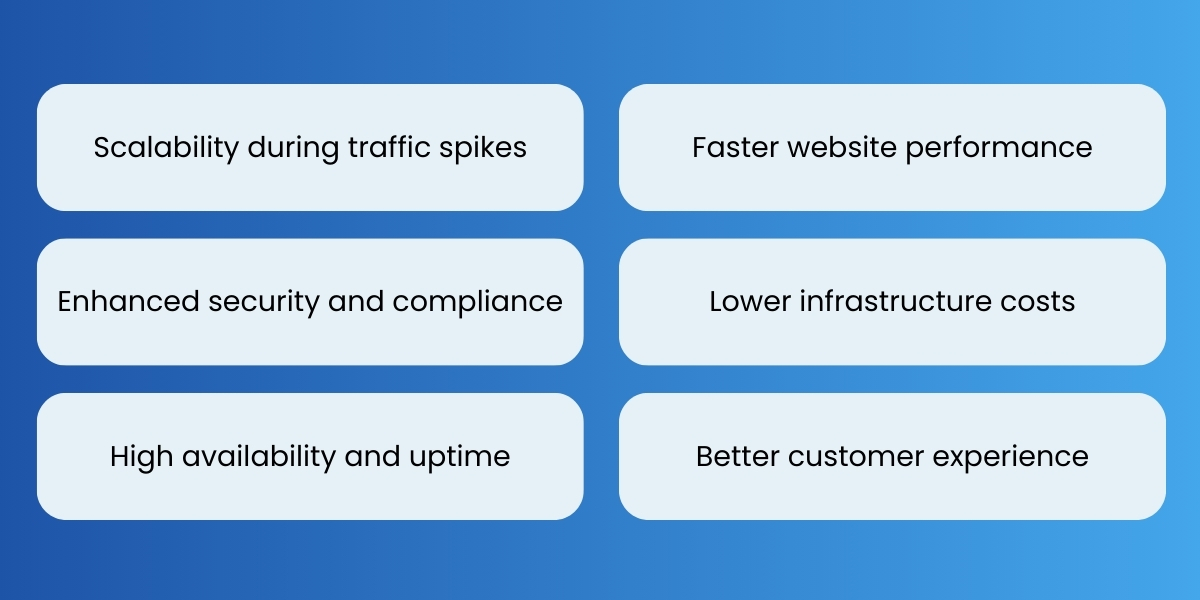
Scalability and Flexibility
A cloud solution allows eCommerce businesses to increase or decrease the amount of resources based on demand. This is especially beneficial during the busy holiday shopping season or when launching promotional offers or flash sales where increased traffic may occur quickly.
With Scalability, eCommerce businesses will enjoy the benefits of:
- Maintaining consistent performance during traffic spikes
- Eliminating downtime due to overloaded infrastructure
- Maximizing resource usage efficiently
High Performance and Speed
Page speed is a critical factor in converting customers and optimizing for search engines. The advanced technologies built into cloud solutions provide eCommerce companies with access to Global Content Delivery Networks (CDN) as well as an optimized infrastructure, which will result in better load time for their customer base.
This improved performance leads to:
- Improved User Experience
- Improved Conversion Rate
- Reduced Bounce Rates
Cost Optimization
Cloud providers use a pay as you go basis; therefore, eCommerce companies no longer need to purchase expensive hardware or maintain high upfront prices. eCommerce companies only pay for the resources they consume, meaning operational costs can be easily controlled.
Optimizing your costs will deliver many advantages including:
- Reducing overall Infrastructure costs
- Reducing Maintenance and Upgrade Costs
- Improving overall Return on Investment
Enhanced Security and Compliance
For an eCommerce platform that deals with sensitive customer and payment information, security is an absolute necessity. Cloud providers offer eCommerce businesses advanced security features, including; Encryption of Data, Firewalls, and Certifications for Compliance.
By using Cloud based Security, eCommerce Businesses will be protected against:
- Data Breaches
- Payment Fraud
- DDoS Attacks
- Regulatory Compliance Violation
Fundamental Elements of Cloud Services for eCommerce
Cloud hosting and supporting infrastructure
The foundation of an eCommerce service is cloud hosting, which consists of scalable computer, storage, network resources. This type of infrastructure enables eCommerce applications to have enough capacity to handle high volumes of traffic and provides consistent performance.
Content Delivery Network
A CDN is a network of servers across the globe that stores cached versions of content to deliver it efficiently to visitors based on their geographic location and minimize the latency they experience when accessing content.
Database Service
Databases hosted in the cloud have been optimized to provide high performance, availability, reliability, and scalability. This enables eCommerce providers to easily and economically store and access product catalogs, order history, and customer profile information.
Secure Payment Gateway and Fraud Detection Service
Cloud provider payment gateways and fraud detection services ensure that payments are safely processed, and that eCommerce websites comply with regulatory requirements.
Analytics & Business Intelligence
Analytics and BI tools hosted in the cloud provide eCommerce providers with the ability to measure customer behavior, sales performance, and other operational metrics, allowing them to make better data-driven decisions.
Cloud Solutions for Omnichannel eCommerce
Today’s eCommerce has expanded from just an online website to include mobile apps, marketplaces, and social commerce. Cloud solutions provide the ability to integrate all of these channels into a single, seamless experience for consumers.
Key Benefits of Using Cloud Solutions:
- Centralized Customer Data
- Automatic Inventory Updates By The Hour
- Customized Shopping Experience
- Centralized Order Management
Best Practices When Implementing Cloud Solutions in eCommerce
Choosing the Right Cloud Model:
Public, Private, or Hybrid Model; It is important to choose the right cloud model depending on the company’s size, security needs, and growth potential.
Optimizing for Performance:
Use caches, CDNS (Content Delivery Networks), and load balancing to maximize the performance of all devices.
Secure:
Implement Strong Authentication, Encryption, and Monitoring to protect customer information and develop their trust.
Planning for Future Growth:
Creating an Infrastructure That Can Add Additional Features and Additional Traffic without Redesign.
Monitoring and Optimizing Cost:
Regularly review Cloud usage and optimize resources to eliminate wasteful spending.
How Cloud Solutions Enable Innovation in eCommerce
The Innovation of eCommerce Has Been Remarkably Supported Through Cloud Platforms That Can Quickly Respond to Changes in Technology Such As:
- Artificial Intelligence Product Recommendations
- Personalized Marketing Campaigns
- Current Information Analytics
- Business Process Automation
These new capabilities provide eCommerce with a Competitive Edge and Customer-Centric Advantage.
Conclusion
Cloud solutions have become a cornerstone of modern eCommerce success. By providing scalability, performance, security, and cost efficiency, cloud computing empowers eCommerce businesses to deliver exceptional customer experiences while supporting sustainable growth.
As online commerce continues to expand, adopting cloud solutions is no longer a choice—it is a strategic necessity. Businesses that embrace cloud technology can innovate faster, operate more efficiently, and compete effectively in the digital marketplace.
Ready to scale your eCommerce business with the cloud?
Empirical Edge delivers secure, high-performance cloud solutions that boost speed, scalability, and online sales. Let’s build your future-ready eCommerce platform.
Frequently Asked Questions
Yes. Cloud eCommerce solutions offer enterprise-grade security including data encryption, secure payment environments, firewall protection, DDoS prevention, and compliance support for PCI-DSS, GDPR, and other regulations.
Cloud solutions eliminate the need for expensive hardware, reduce maintenance costs, and allow businesses to pay only for the resources they use—making them more cost-efficient than traditional hosting.
Yes. Cloud platforms support multi-store setups, global CDN distribution, multi-currency payments, and regional hosting—making them ideal for international and enterprise eCommerce operations.
Empirical Edge provides end-to-end cloud eCommerce services including cloud strategy, migration, performance optimization, secure architecture design, platform development, and ongoing support to ensure scalable and high-converting online stores.
Written by: Empirical Edge Team